Read time: 5 minutes
In today's edition:
On My Mind: Cities were once built for people. Now, they’re being built for bandwidth.
Interesting Insight: According to a 2025 McKinsey report, cities that integrate cloud infrastructure - data centers, smart grids, and digital twins - are seeing up to 30% higher per-capita productivity than those that don’t.
A Question For You: If your home, office, and city all went fully digital -
what part of the real world would you still refuse to give up?
A THOUGHT TO PONDER
You may forget the square footage, but you’ll always remember how a home made you feel.
ON MY MIND
Cities were once built for people. Now, they’re being built for bandwidth.
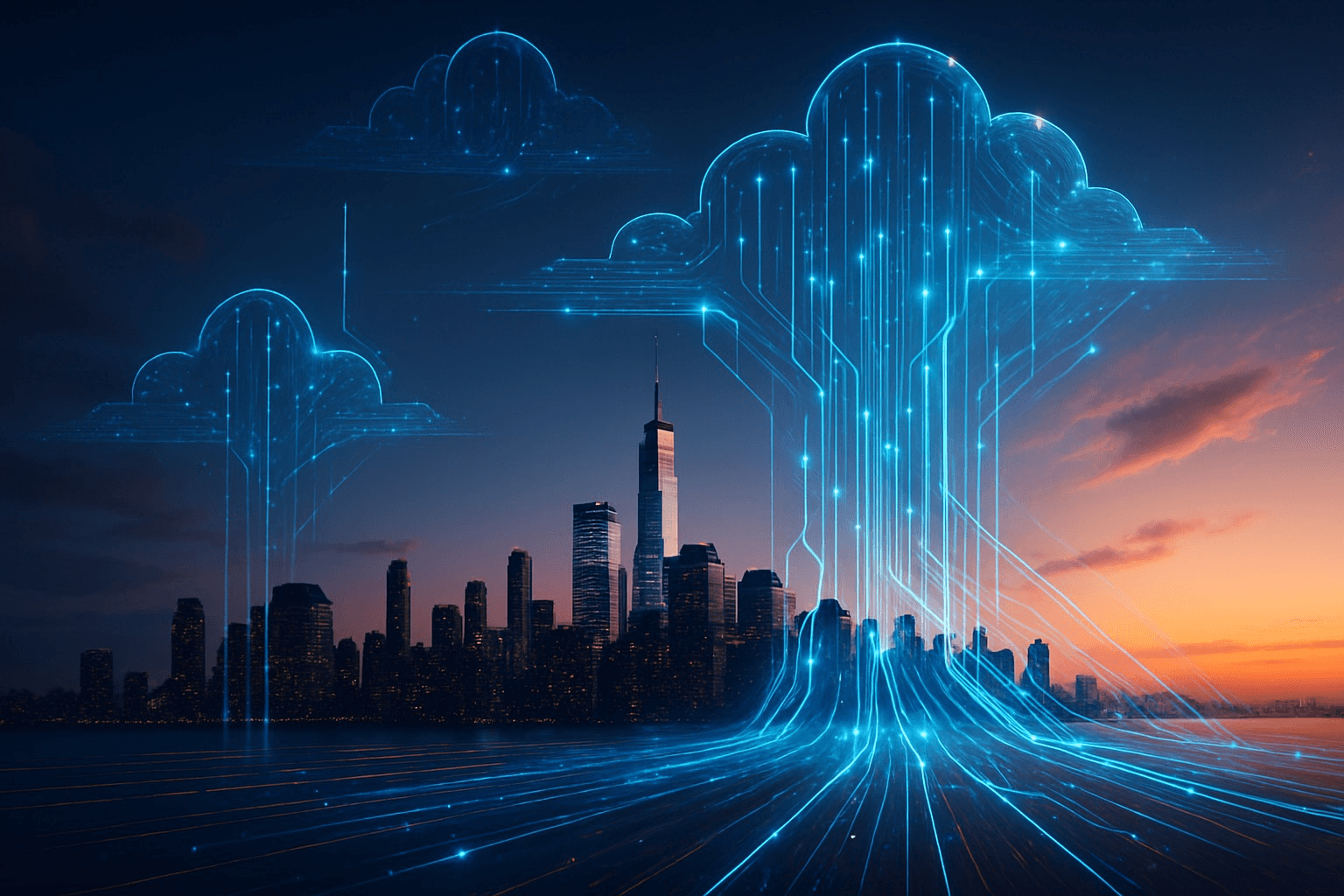
Now, they’re being built for bandwidth. Across the world, from Singapore to San Francisco, city leaders are no longer competing on culture or commerce - they’re competing on speed. The next great urban advantage isn’t location or infrastructure. It’s latency. As cloud computing, AI, and remote work reshape how economies operate, cities are entering a strange new contest: the race between the digital cloud and the physical city. One exists in servers, the other in streets. Both promise connection. One is winning.
But what happens when the cloud begins to outperform the city - when your digital environment feels more efficient, responsive, and personalized than your real one? That’s the silent crisis and profound opportunity facing urban planners, developers, and citizens today. Cities are being forced to ask: if the internet has become the new downtown, what does it mean to build a physical place worth logging into?
The Shift: From Location to Latency
For the last hundred years, proximity defined opportunity. You moved closer to factories, offices, or schools. Cities were magnets because they offered access - to jobs, people, and ideas. But in the age of cloud computing, proximity no longer equals access. Anyone with a strong Wi-Fi signal can now plug into a global economy. A coder in Coimbatore can collaborate with a designer in Copenhagen. Geography has lost its monopoly on connection.
This shift is rewriting urban economics. The “value of place” is being replaced by the “value of connection.” Three trends define this evolution. Cloud Citizenship: professionals now spend their most productive hours in digital environments - Slack, Zoom, Teams - more than physical offices. Data Infrastructure > Roads: cities investing in high-speed networks, renewable grids, and AI-based utilities are becoming magnets for hybrid enterprises. Remote Capitalism: property values are decoupling from geography; by 2030, the most valuable “addresses” may not be postal but platform-based. The next great cities won’t just be built of concrete - they’ll be coded.
INTERESTING INSIGHT
According to a 2025 McKinsey report, cities that integrate cloud infrastructure - data centers, smart grids, and digital twins - are seeing up to 30% higher per-capita productivity than those that don’t.
According to a 2025 McKinsey report, cities that integrate cloud infrastructure - data centers, smart grids, and digital twins - are seeing up to 30% higher per-capita productivity than those that don’t. The data is clear: the more deeply a city embeds digital systems into its foundations, the more efficiently it operates. From managing energy consumption to optimizing traffic and public services, the “smart” layer of a city has become its new economic engine. Connectivity is no longer a luxury - it’s infrastructure.
But here’s the paradox: the more digitized a city becomes, the more its citizens crave human-scale experiences - community, walkability, green spaces, and cultural depth. In an age of seamless apps and predictive systems, people are rediscovering the need for friction - the kind that builds belonging, emotion, and identity. The smartest cities of tomorrow won’t just be automated; they’ll be intimate. The challenge for urban designers is to merge silicon with soul - to ensure that the digital pulse doesn’t erase the human heartbeat.
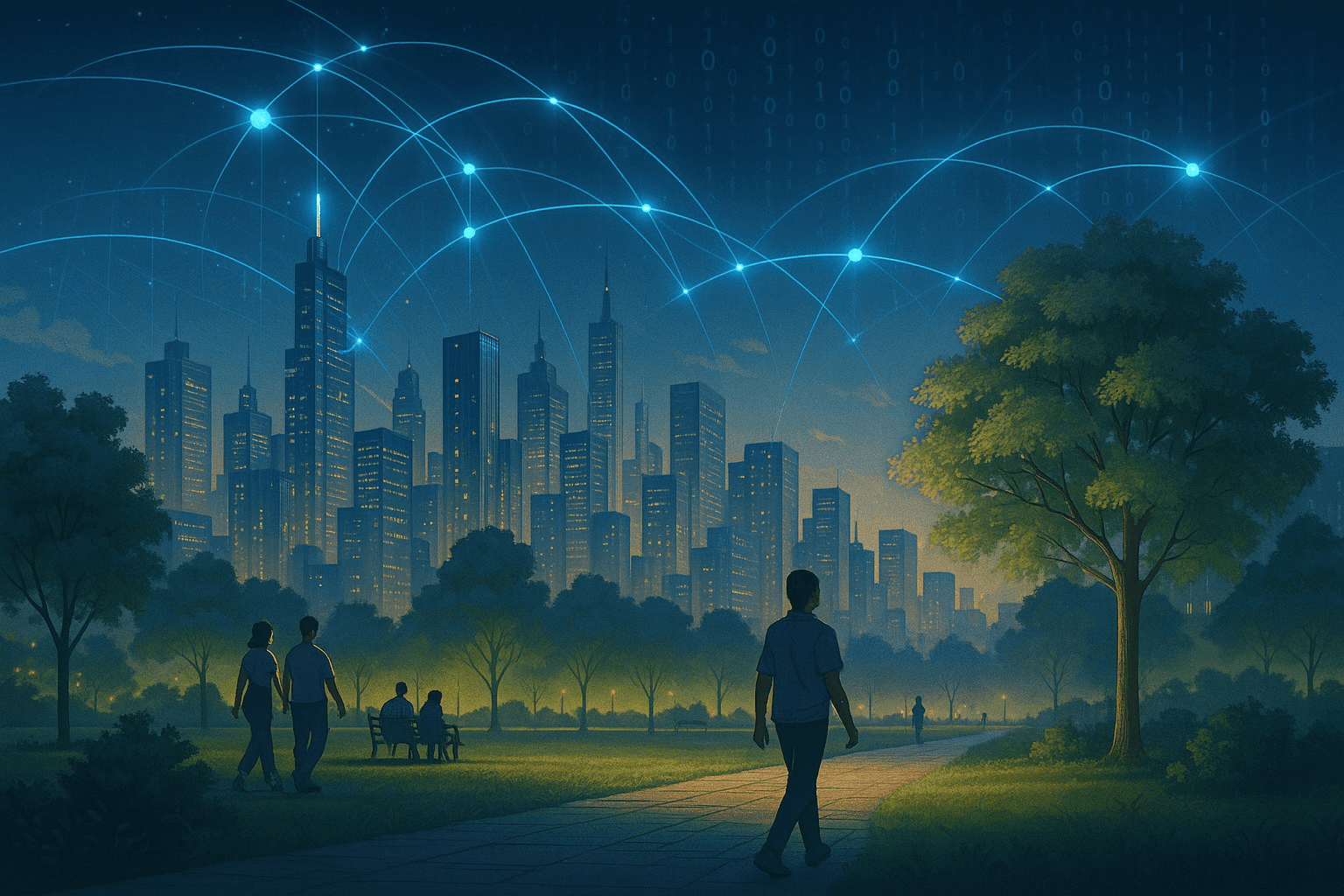
That’s why the cities of the future won’t compete against the cloud, but alongside it. They’ll need to offer something algorithms cannot: meaning. As artificial intelligence takes over the logistics of living, urban life will have to focus on the art of living. Parks, plazas, cafes, and cultural institutions will become as critical as broadband networks and data hubs. The next urban advantage will come from balance - the harmony between high-speed systems and slow, shared experiences.
Developers and policymakers are now standing at an unusual crossroads. Homes are becoming servers - with remote work and digital collaboration, a property’s upload speed now shapes its value as much as its view. Townships are evolving into ecosystems, blending physical and digital life to form “hybrid habitats” where everything from groceries to governance runs on connected grids. And investors are hedging on geography - favoring assets that adapt to shifting digital networks rather than being confined by location.
This means the real differentiator for real estate in the coming decade won’t be land - it’ll be responsiveness. The projects that thrive will be those that update like software - flexible, intelligent, and future-proof. Buildings will no longer be static assets but living systems, constantly evolving with technology and user behavior. The next skyline won’t just rise in glass and concrete - it’ll hum in bandwidth, powered as much by data as by design.
AROUND THE WEB
The Rise of the Cloud City - [ Bloomberg Urban Futures ]
How data centers are reshaping urban skylines and local economies.
Smart Cities vs. Smart Citizens - [ Harvard Business Review ]
Why civic empathy matters more than sensors in building the next generation.
Architecture for the Age of AI - [Dezeen]
Exploring how architects are designing for both physical and virtual communities.
Remote Work’s Hidden Urban Impact - [The Economist]
How hybrid work is quietly transforming real estate demand and city planning.
A QUESTION FOR YOU
If your home, office, and city all went fully digital - what part of the real world would you still refuse to give up?
FEEDBACK
Have any detailed feedback? Write to us at hello@ashwinderrsingh.com and let us know how we can do better.
Disclaimer: This newsletter is intended for informational purposes only and should not be construed as professional advice. Please conduct your own due diligence prior to making any decisions.

Elevate your real estate journey with exclusive insights derived from decades of experience.
Join my tribe of home buyers, real estate and capital market investors, students, developers, home loan professionals and channel partners. Stay updated with my free, curated insights delivered weekly.
Subscribe to my newsletter