Read time: 6-7 minutes
In today's edition:
On My Mind: How Tech Founders Are Buying Land Differently
Interesting Insight: The new-age billionaire plot spec
A Question For You: Would your parcel survive a 48-hour founder audit?
Bonus: A one-page Founder Plot Sheet (inside)
A THOUGHT TO PONDER
Luxury used to mean marble and gold. Today, for founders, true luxury is time and seamless land that removes all friction.
ON MY MIND
How Tech Founders Are Buying Land Differently

1. A Quiet Revolution in Land Buying
In the last few years, a subtle but powerful shift has taken hold in India’s land market. Today’s most discerning buyers-tech founders, product builders, and operator-investors-are shopping for acreage using a playbook that radically departs from old luxury norms. These buyers are not chasing marble lobbies, clubhouses, or concierge services. They’re laser-focused on infrastructure, speed to build, permission predictability, and privacy. Their version of premium is rooted in systems that don’t fail.
2. Luxury Reimagined as Sovereignty
This isn’t about ostentation-it’s about operational sovereignty. When your time is priced in basis points and breakthroughs, land becomes a force multiplier. The ideal parcel is the one that compounds your work, family, and mission with the least friction. These buyers see land as infrastructure, not indulgence. They want clarity, control, and continuity-not distractions. Developers who understand this are shifting from selling amenities to delivering reliability, velocity, and resilience.
3. The New Land Thesis: 10 Non-Negotiables
New-age founders assess land on ten uncompromising criteria. These include title clarity and convertibility, unbreakable ingress/egress, and legal utility redundancy (grid + on-site backups, fiber diversity, water rights). They demand permitting predictability with dated roadmaps, not vague assurances. Privacy must be baked into the site via natural setbacks and low-visibility arrivals. Build velocity is crucial-local contractor readiness and logistics must allow fast execution. Climate risks, stewardship plans, and exit optionality round out the checklist. Vanity features? Not welcome.
4. What They Will-and Won’t-Pay For
There’s a clear delineation in value perception. They won’t pay for concierge desks, marble-heavy lobbies, vanity marinas, or “brand storytelling” that doesn’t enhance uptime or reduce friction. What they will pay for: secured easements, grid upgrades, solar + battery integration, legal water infrastructure, and a fiber backbone with true redundancy. Even security is expected to be discreet-designed into the land, not bolted on as spectacle.
5. Estate Archetypes & Deal Preferences
Three estate archetypes have emerged: The Prototyper’s Ranch (maker-centric, rules-compliant), The Quiet Campus (family-first, low-signature), and The Retreat Node (deep work, high-nature, 60-120 minutes from a metro). These founders prefer ring-fenced SPVs with clean cap tables, staged payments tied to approvals, and land pooling or JDAs with development rights and control. They expect covenant protection, ROFR on adjoining parcels, and clear structures for long-term context control.
6. How Developers Can Win These Buyers
Winning developers meet buyers on first principles. That means leading with maps, permits, and due diligence stacks-not renders. A published Risk Register with mitigation strategies builds trust. Offering a Build-Readiness Kit-including vetted contractors, signed utility MoUs, and a Gantt chart for the first 120 days-sets the right tone. Above all, design covenants that protect the future of the block. In doing so, the developer’s brand becomes more than a name-it becomes the guardian of context and compound value.
INTERESTING INSIGHT
The new-age billionaire plot spec
In conversations with founder-family offices over the past year, a clear pattern has emerged: priorities have shifted. Seven out of ten inquiries don’t open with “sea views” or “golf clubs”-they start with three pointed, practical questions: How fast can I legally build? What fails if the grid fails? Who controls my future neighbors? These are not lifestyle buyers; they are system thinkers seeking predictability and control.
If a seller or developer can answer those three questions crisply-with facts, not fiction-price resistance often disappears. These buyers aren’t looking for discounts; they’re looking for clarity. Miss the mark on one of these fronts, and no amount of storytelling, landscaping, or lifestyle design will salvage the conversation. For this audience, certainty is luxury, and friction is a dealbreaker.
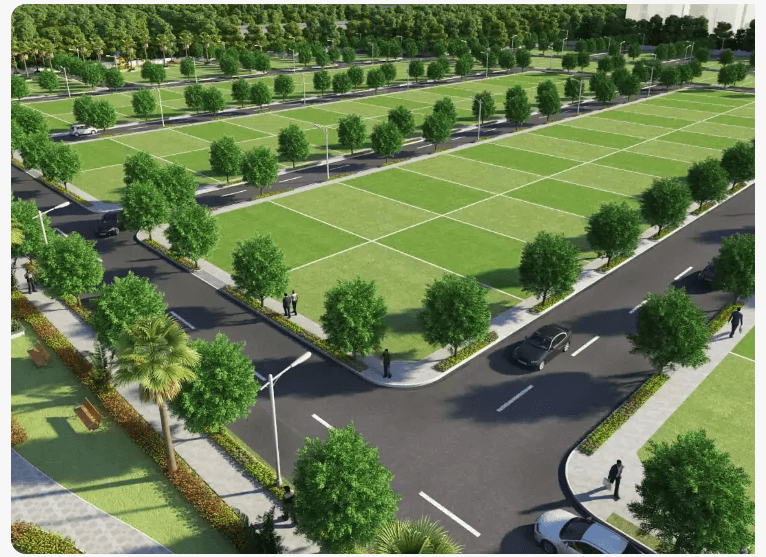
Buyers are trained to scan for green flags. They look for dual access roads, a dated and signed approval roadmap, fiber from two independent providers (in writing), and proximity to a substation. Critical documents like flood maps, soil reports, and title chains should be pre-packaged. If these elements are in place, interest converts quickly—and due diligence becomes a speed run, not a slog.
Conversely, the red flags are equally clear. Unclear right-of-way (ROW) access, vague promises like “we’ll manage approvals,” single-point utility dependencies, and proximity to unpredictable or noisy neighbors send founders running. These buyers aren’t interested in managing chaos-they want certainty from day one. If a developer doesn’t control the context, the buyer won’t trust the future.
Today’s top-tier land buyers don’t need to be sold a dream-they need to be shown a system that works. The old luxury pitch is obsolete. For developers, adapting to this new checklist is not just about meeting expectations-it’s about staying in the conversation. Answer the hard questions upfront, and you’ll find yourself building not just homes, but long-term trust with the most discerning audience in the market.
AROUND THE WEB
CRISIL - Rating criteria for Real Estate SPVs (PDF):
Ring-fencing project cash flows, escrow mechanics, and risk lenses for SPVs.
NREL - Microgrids | (Grid Modernization):
What microgrids are, why they improve reliability, and how islanding works.
Section 40, Transfer of Property Act - Restrictive Covenants (India):
How negative covenants can bind successors and protect context.
A QUESTION FOR YOU
Would your parcel survive a 48-hour founder audit? If not, which two gaps-approvals predictability and utility redundancy or access rights-would you fix first?
FEEDBACK
Hit reply with your city and a live parcel you want evaluated. I read every note and pick a few to benchmark each month.
Disclaimer: This newsletter is intended for informational purposes only and should not be construed as professional advice. Please conduct your own due diligence prior to making any decisions.


Elevate your real estate journey with exclusive insights derived from decades of experience.
Join my tribe of home buyers, real estate and capital market investors, students, developers, home loan professionals and channel partners. Stay updated with my free, curated insights delivered weekly.
Subscribe to my newsletter