Read time: 7 minutes
In today's edition:
On My Mind: The Homes That Make People Kinder
Interesting Insight: Environmental psychology shows that spatial design directly affects empathy, aggression, and cooperation.
A Question For You: Does your home calm people - or compress them?
A THOUGHT TO PONDER
What if kindness were embedded in our spaces - shaped by design, proximity, and environments that naturally encourage empathy and human connection?
ON MY MIND
The Homes That Make People Kinder
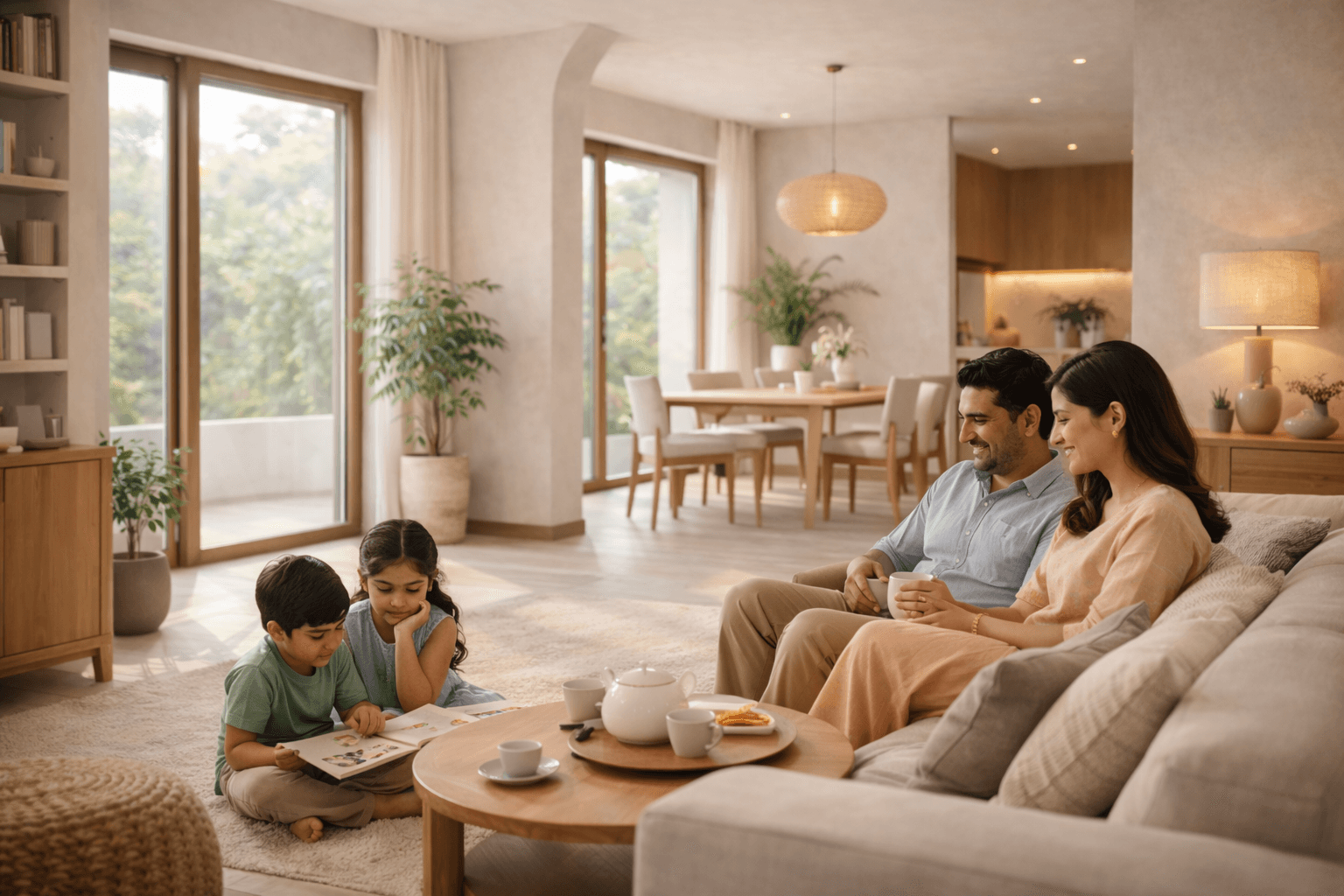
Some homes quietly civilize us. They slow us down without demanding attention, soften our reactions, and create space for thought, patience, and listening. In such homes, life breathes. Others do the opposite compressing life into narrow corridors, removing pauses, and turning everyday interactions into collisions. Over time, these invisible pressures accumulate, shaping moods, tempers, and relationships in ways we rarely notice but deeply feel.
Design affects behaviour more than we admit. Decades of environmental psychology confirm what architects have long sensed: people behave differently in different spaces. Homes filled with natural light, visual depth, transitional zones, and gentle pauses reduce stress and encourage cooperation. Homes without these elements quietly amplify irritability, even among otherwise calm individuals. The space doesn’t just hold people it influences who they become inside it.
Traditional homes understood the power of thresholds. A step before entering, a veranda before a room, a courtyard before the home fully revealed itself these were not decorative gestures. They acted as emotional regulators, helping people transition, decompress, and prepare. Modern homes often erase these layers, replacing them with constant exposure. And constant exposure, psychological and emotional, gradually hardens people.
As cities densify and homes shrink, kindness itself is becoming a design metric. The question can no longer be only “How many units fit?” but “How do people behave once they move in?” True luxury is not excess it is emotional ease. Homes that offer quiet without isolation, togetherness without crowding, and privacy without withdrawal are the ones that endure, not just structurally, but humanly.
INTERESTING INSIGHT
Environmental psychology shows that spatial design directly affects empathy, aggression, and cooperation.
Studies from Harvard and University College London show that environments shaped by natural light, visual openness, and spatial pauses consistently increase empathy while reducing aggressive behaviour. These findings suggest that space is not a passive backdrop, but an active force in how people relate to one another.
When light enters freely and views extend beyond immediate walls, the mind relaxes. Openness reduces the feeling of being trapped, lowering stress responses that often trigger irritation or hostility. In such spaces, people are more likely to listen before reacting.
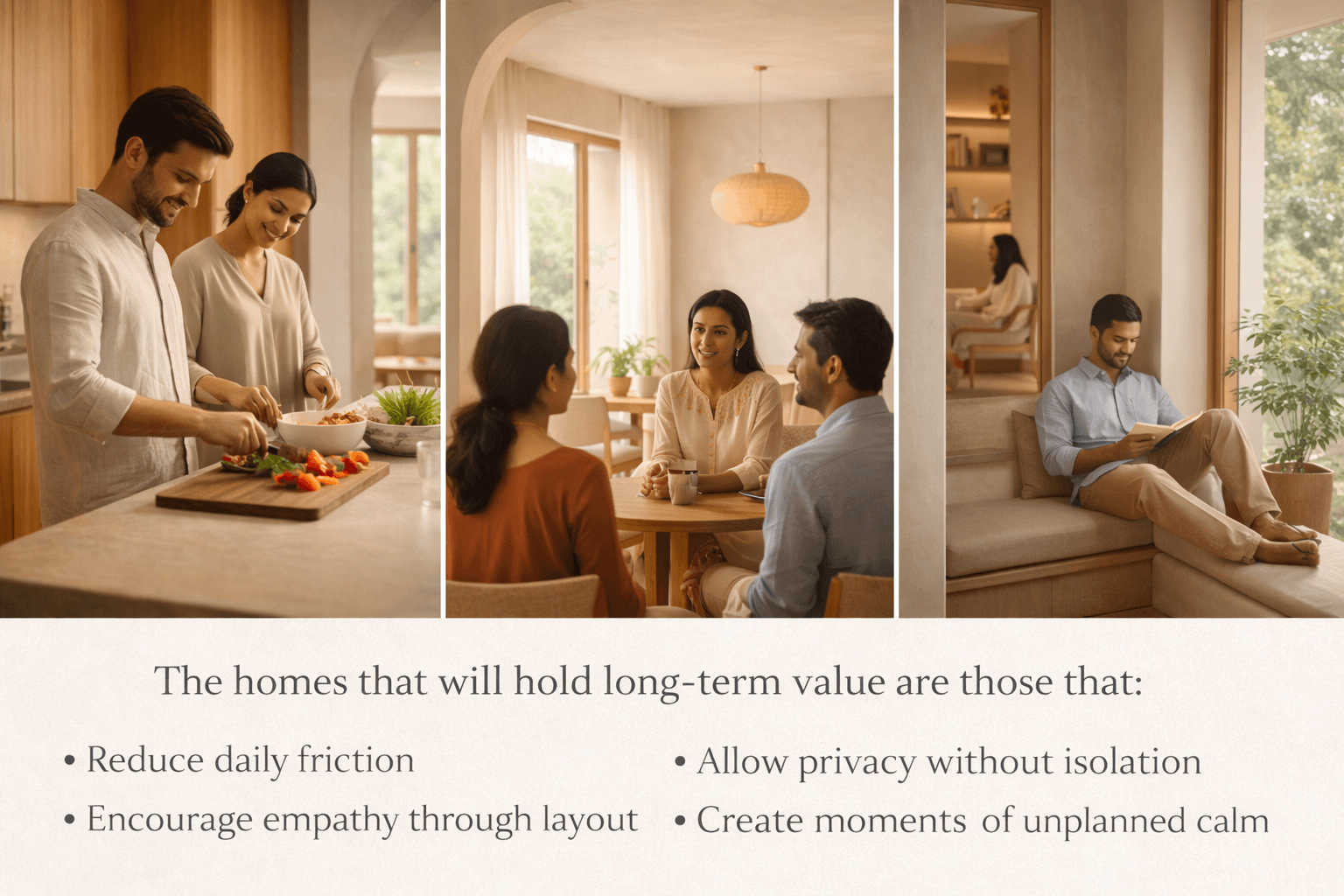
Spatial pauses areas without pressure to move, perform, or respond play an equally powerful role. They allow emotional regulation to happen naturally, giving individuals time to process rather than collide. Calm, in these moments, becomes a shared condition.
Design, therefore, does more than influence mood or aesthetics. It shapes daily behaviour in subtle but lasting ways, determining whether interactions feel cooperative or confrontational. Over time, these small behavioural shifts compound into cultural patterns within homes and communities.
In this sense, design influences morality itself. By deciding how much light, openness, and pause a space allows, we quietly decide how much empathy it makes possible.
AROUND THE WEB
How Architecture Shapes Human Behaviour - [Harvard Design Review]
Examines how spatial design influences emotional balance, empathy, and everyday human behaviour within homes.
The Psychology of Space - [The Atlantic]
Why the spaces we live in quietly shape our behaviour, empathy, and the way we treat others.
Why Courtyards Are Returning - [Financial Times]How traditional design principles are re-emerging and shaping the language of modern residential architecture.
A QUESTION FOR YOU
Does your home encourage patience and calm, or quietly create pressure and emotional friction?
FEEDBACK
Have any detailed feedback? Write to us at hello@ashwinderrsingh.com and let us know how we can do better.
Disclaimer: This newsletter is intended for informational purposes only and should not be construed as professional advice. Please conduct your own due diligence prior to making any decisions.

Elevate your real estate journey with exclusive insights derived from decades of experience.
Join my tribe of home buyers, real estate and capital market investors, students, developers, home loan professionals and channel partners. Stay updated with my free, curated insights delivered weekly.
Subscribe to my newsletter