Read time: 9 minutes
In today's edition:
On My Mind: The Kindest Buildings Are Designed for Bad Days
Interesting Insight: Architecture and cortisol levels
Around the Web: Wellness design, acoustic psychology, and biophilic architecture.
A Question For You: When you walk into your home after a difficult day, does the space soften you? Does it bring you peace and comfort?
A THOUGHT TO PONDER
Not every day in a home is a celebration.
Some days are quiet battles.
What if buildings were designed with that in mind?
ON MY MIND
The Kindest Buildings Are Designed for Bad Days
Real estate conversations are usually about aspiration.
Bigger. Taller. Brighter. Louder.
But life is not always aspirational.
Life includes:
Loss.
Failure.
Illness.
Financial strain.
Relationship stress.
On those days, your building becomes more than shelter.
It becomes an emotional container.
The question is — does it contain well?
Many modern homes are overstimulating.
Large echoing spaces.
Harsh lighting.
Continuous open layouts.
They celebrate openness.
But openness without refuge becomes exposure.
On a difficult day, exposure feels exhausting.
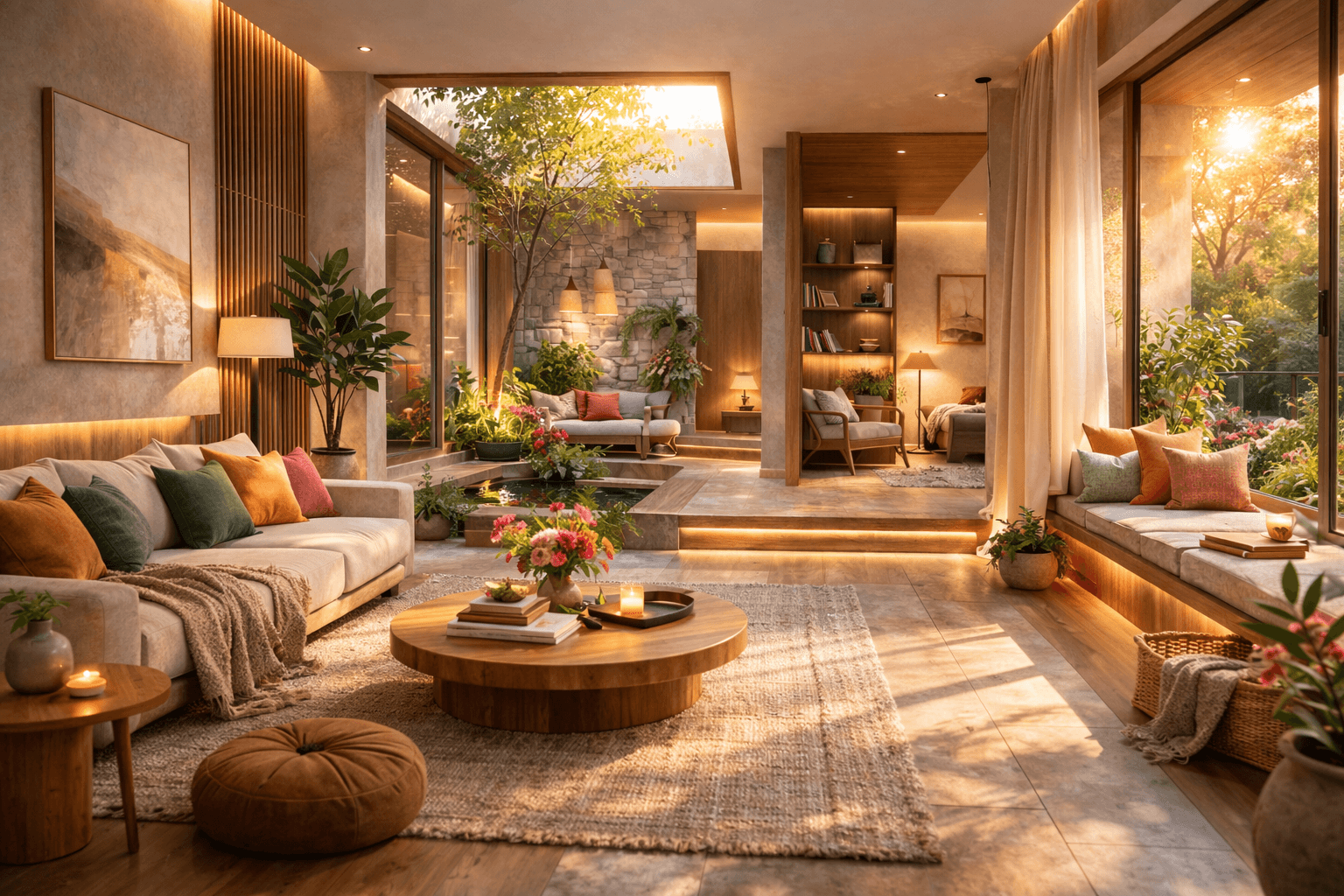
A kind building works differently.
It offers gradation.
Public space → semi-private space → private space.
It offers:
Light that shifts gently across the day
Materials that feel warm, not sterile
Corners that allow retreat
Sound absorption instead of amplification
Visual calm instead of visual noise
Environmental neuroscience confirms what traditional architecture practiced intuitively.
Soft lighting and acoustic buffering reduce stress hormone spikes.
Spatial boundaries improve emotional regulation.
Even ceiling height influences psychological comfort.
Older Indian homes — particularly courtyard homes — were masters of emotional buffering.
The central courtyard allowed connection.
The surrounding rooms allowed retreat.
There was rhythm.
Modern construction often removes rhythm for efficiency.
Open plan. Continuous flooring. Seamless visibility.
It looks impressive.
But on a bad day, it feels relentless.
And here lies the shift our industry must confront.
Luxury in the next decade will not be defined by spectacle.
It will be defined by support.
The most valuable residential projects will be those that:
Improve sleep quality
Reduce stress accumulation
Allow multi-generational privacy
Moderate temperature and sound
Create emotional zoning
This is not sentimental thinking.
It is strategic thinking.
Urban life is becoming more intense.
Work from home blurs boundaries.
Social media amplifies comparison.
If homes don’t provide recovery, burnout becomes domestic.
Developers who understand this will not just build square footage.
They will build resilience.
The kindest buildings are not flashy.
They are thoughtful.
They don’t scream success.
They whisper stability.
And stability, in volatile times, is the highest form of wealth.
INTERESTING INSIGHT
Kind Architecture is Measurable
Research in environmental psychology reveals that the design of our living spaces has a profound impact on our mental and emotional wellbeing. Studies show that acoustic absorption can significantly reduce perceived stress levels, while natural light plays a crucial role in mood regulation and emotional balance. Additionally, well-defined personal zones within a home have been found to reduce household conflict, giving each family member the space they need to recharge. Biophilic elements—natural materials, greenery, and organic forms—have been proven to improve cognitive restoration, helping us recover from mental fatigue.
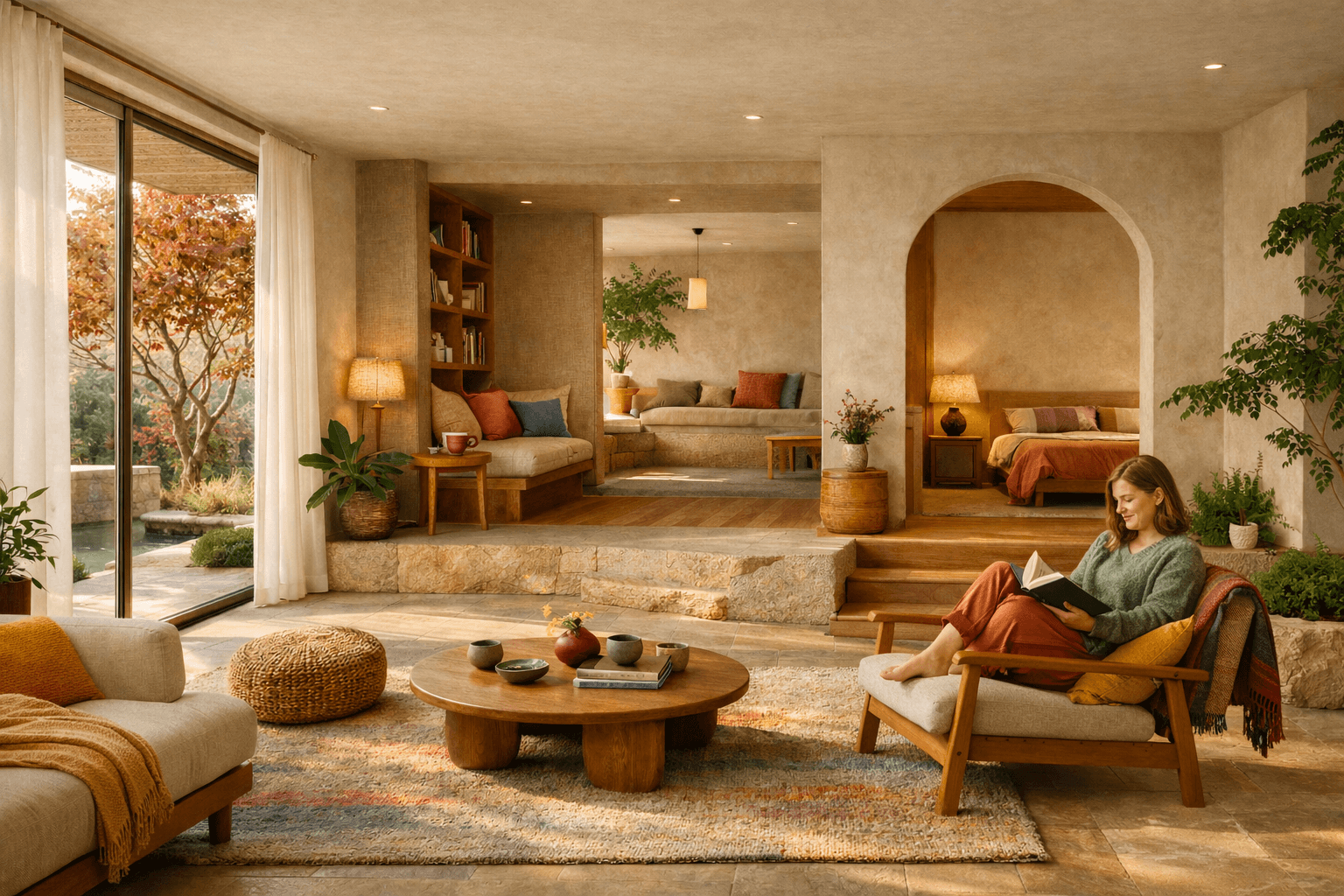
The science is clear: kind architecture isn't just a feeling—it's measurable. Every design choice, from the way sound travels through a room to the quality of light that enters your space, directly influences how you feel, think, and interact with those around you. When homes are thoughtfully designed with these principles in mind, they become more than just shelters—they become sanctuaries that actively support your wellbeing.
AROUND THE WEB
The Neuroscience of Architecture (Harvard GSD)
Children understand space through containment and repetition, not size or visual openness.
Emotional Impact of Built Environments (MIT Media Lab)
Memory forms strongest in environments that reduce sensory overload and feel emotionally secure.
Health & Wellbeing Report (World Green Building Council)
Open layouts can increase stress by reducing privacy, acoustic control, and psychological boundaries.
The Rise of Wellness Real Estate (Financial Times)
Open layouts can increase stress by reducing privacy, acoustic control, and psychological boundaries.
A QUESTION FOR YOU
When you walk into your home after a difficult day, does the space soften you? Does it bring you peace and comfort?
FEEDBACK
Have any detailed feedback? Write to us at hello@ashwinderrsingh.com and let us know how we can do better.
Disclaimer: This newsletter is intended for informational purposes only and should not be construed as professional advice. Please conduct your own due diligence prior to making any decisions.

Elevate your real estate journey with exclusive insights derived from decades of experience.
Join my tribe of home buyers, real estate and capital market investors, students, developers, home loan professionals and channel partners. Stay updated with my free, curated insights delivered weekly.
Subscribe to my newsletter