Read time: 6-7 minutes
In today's edition:
On My Mind: The Quiet Shift No One Is Talking About in Real Estate
Interesting Insight: Why long-term home ownership is quietly rising even as transaction volumes slow
A Question For You: Is your home working harder for your balance sheet - or for your life?
A THOUGHT TO PONDER
What if the most valuable home of the future isn’t the one that grows the fastest -but the one you never want to leave?
ON MY MIND
The Quiet Shift No One Is Talking About in Real Estate

For decades, real estate trained us to think like traders. We learned to evaluate homes through the language of markets - buy low, exit well, track appreciation, optimize returns. Homes were spoken about the way one speaks of stocks, reduced to spreadsheets, forecasts, and future exit scenarios. Value was something to be measured ahead of time, not experienced over time.
But something subtle, and deeply human, has shifted. Today, many buyers are no longer obsessed with what a home might be worth tomorrow. Instead, they are asking a quieter, more meaningful question: what will this place hold together? In a world that feels increasingly fragmented, the home is being reimagined not as a vehicle for growth, but as a source of grounding.
This marks a move from appreciation to attachment. An asset is something you monitor; an anchor is something you return to. In an age defined by constant mobility - changing jobs, cities, and even identities - the home has taken on a new role. It is no longer just shelter or investment. It has become emotional infrastructure, expected to reduce anxiety, absorb external noise, and offer routine in a culture addicted to speed.
That is why families are choosing fewer homes and holding them longer. Why the idea of a “forever home” has returned. Why conversations around design are shifting from glamour to comfort. Features once treated as luxuries - natural light, quiet spaces, walkability, familiar neighbours - are now central, because they invite pause rather than performance and help people feel settled.
This quiet change has powerful implications. Markets may not have fully priced it in, but buyer behaviour already has. Calm, predictability, and emotional comfort are no longer soft preferences; they are decisive factors. And for developers and investors, the message is clear: homes that people don’t want to sell will ultimately be more valuable than homes that trade often. In the next decade, returns will still matter - but they will increasingly follow belonging, not lead it.
INTERESTING INSIGHT
Why long-term home ownership is quietly rising even as transaction volumes slow
Global housing data is beginning to tell a different story. Across multiple markets, average holding periods for primary residences are increasing, even as overall transaction volumes soften. Fewer homes are changing hands quickly, and more are being held onto for longer, signalling that something deeper than market cycles is at play.
This pattern points to a clear behavioural shift. People are anchoring rather than flipping. Stability is being prioritised over liquidity, and the home is increasingly viewed as a long-term emotional decision instead of a short-term financial manoeuvre. The logic of constant churn is giving way to the desire for continuity.
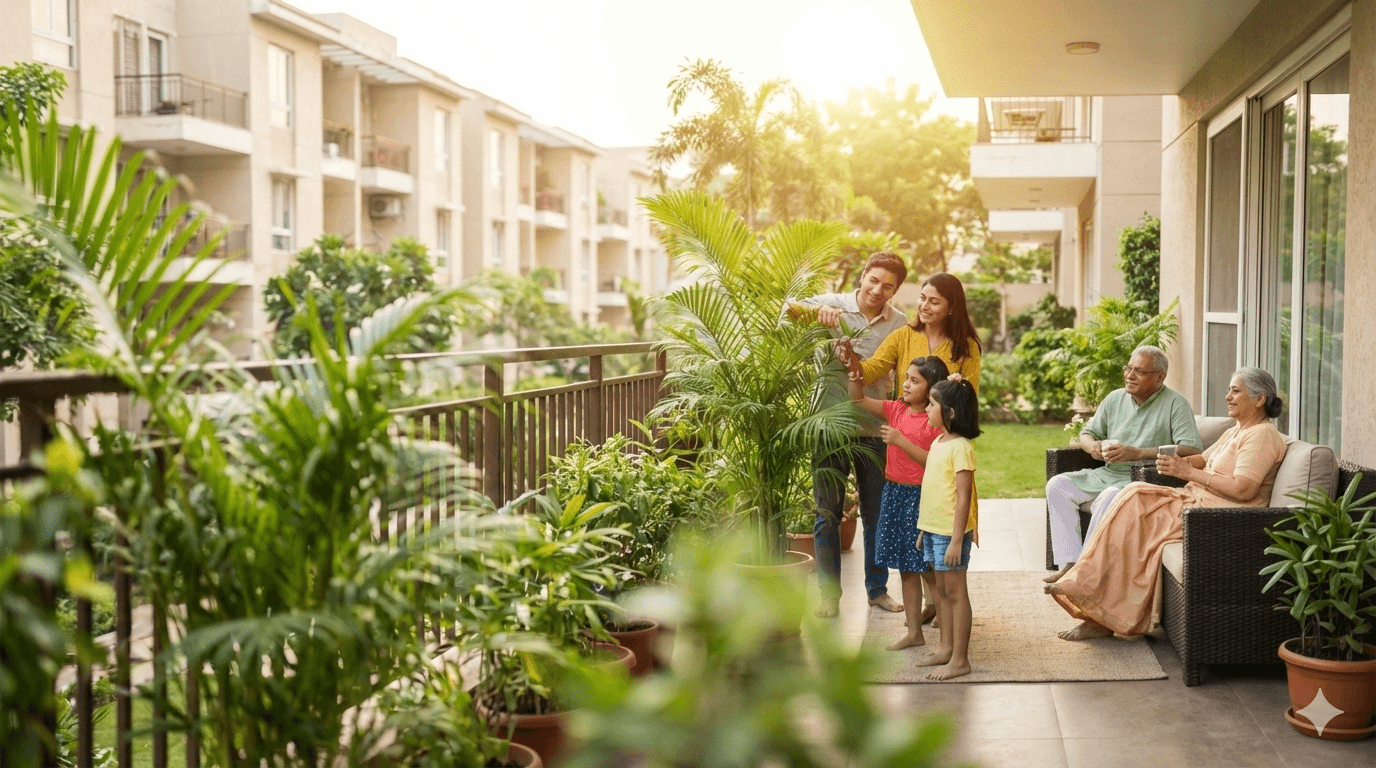
Rather than optimising for exits, buyers are optimising for endurance. They are choosing homes that can absorb life’s changes - careers, families, ageing parents, evolving routines - without demanding relocation every few years. The value of a home is being measured less by how fast it can be sold and more by how well it can be lived in.
In India, this shift is especially visible. Demand is rising for low-density developments that offer breathing space, integrated townships that reduce daily friction, and homes designed for multi-stage living. Buyers are seeking environments that can support them across decades, not just market cycles.
The message is clear. Real estate is being redefined - quietly, but decisively. What was once a game of transactions is becoming a question of roots, and the future of housing will belong to those who understand that anchoring, not acceleration, is now the dominant instinct.
AROUND THE WEB
The Psychology of Place — [The Atlantic]
Our environments quietly shape how we behave, what we remember, and how deeply we experience well-being.
Why We’re Staying Put Longer — [Financial Times]
A global view reveals rising home holding periods, reflecting a collective shift toward stability, attachment, and long-term living.
Designing for Emotional Resilience — [Harvard Business Review]
Spaces designed for calm outperform speed-driven environments by nurturing focus, resilience, and lasting human satisfaction.
A QUESTION FOR YOU
If markets froze for five years, would you still choose the same home for living, belonging, and long-term peace?
FEEDBACK
Have any detailed feedback? Write to us at hello@ashwinderrsingh.com and let us know how we can do better.
Disclaimer: This newsletter is intended for informational purposes only and should not be construed as professional advice. Please conduct your own due diligence prior to making any decisions.

Elevate your real estate journey with exclusive insights derived from decades of experience.
Join my tribe of home buyers, real estate and capital market investors, students, developers, home loan professionals and channel partners. Stay updated with my free, curated insights delivered weekly.
Subscribe to my newsletter