Read time: 6 minutes
In today's edition:
On My Mind: The Secret Lives of Rooftops: Where the city exhales when no one’s watching.
Interesting Insight: Studies from the World Green Building Council show that rooftop greenery can lower indoor temperatures by 5°C and reduce overall building energy use by up to 20%.
A Question For You: When was the last time you stood on a rooftop - not to check your signal, but to check your silence?
A THOUGHT TO PONDER
What if the most overlooked part of a city - its rooftops - became its most powerful mirror, reflecting culture, climate, and consciousness?
ON MY MIND
The Secret Lives of Rooftops: Where the city exhales when no one’s watching
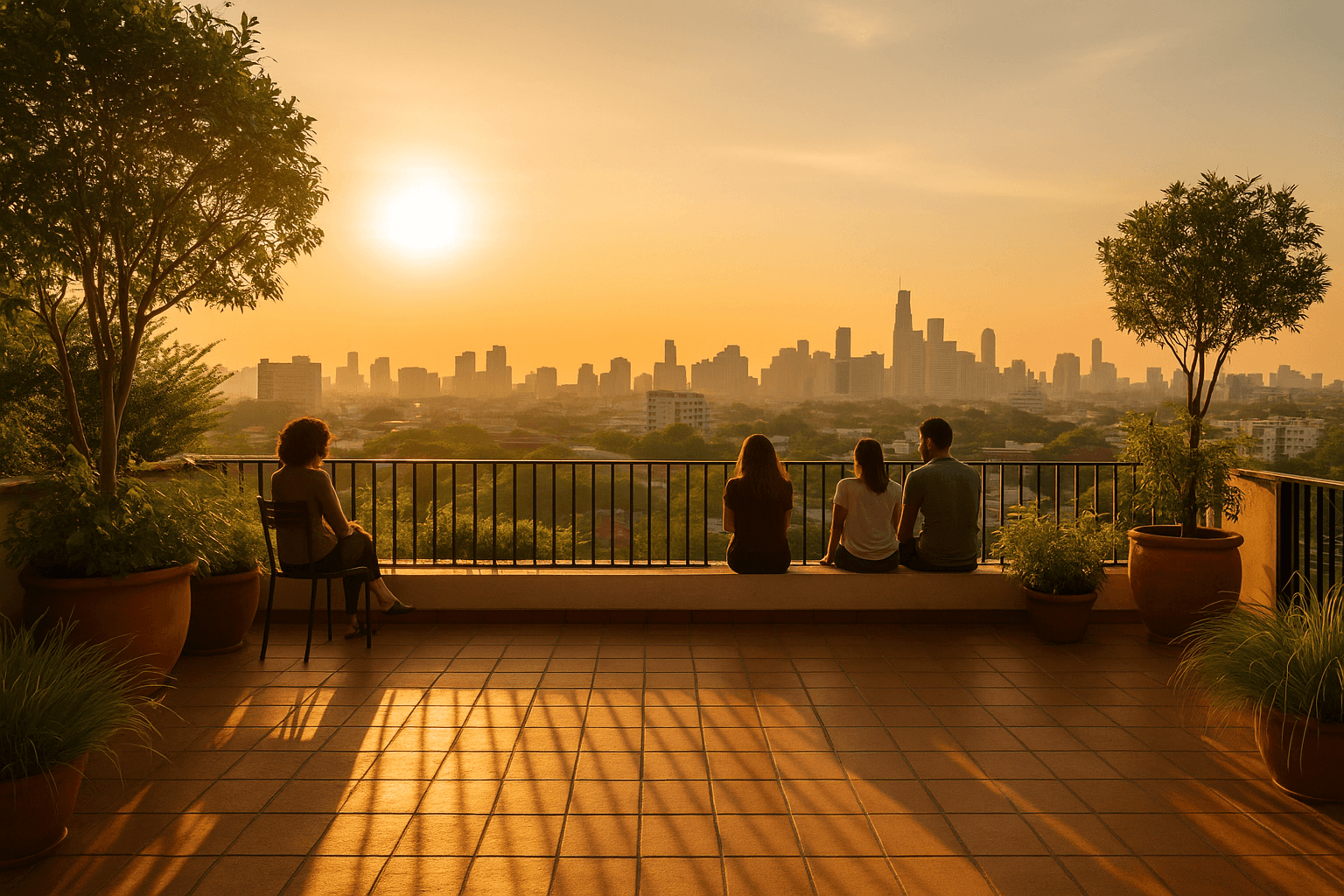
Every city has a secret life - and often, it lives above us.
Rooftops are the invisible stage where cities pause. They hold everything we forget to celebrate - the evening breeze, the unfiltered skyline, the silence that never makes it to ground level. Yet, as developers, architects, and city planners, we’ve spent decades looking outward, not upward. We build taller, not wiser. More units, not more breathing space. But something is changing. Slowly, the rooftops are coming alive again - and with them, a new chapter in how we define urban life.
1. The Rooftop as the City’s Lungs
In older neighborhoods, rooftops were communal spaces - for drying clothes, hosting weddings, watching kites, or simply talking under the stars. They were the original terraces of democracy - no gates, no filters, just people sharing air and time. Today, as cities choke and lifestyles shrink indoors, rooftops are being rediscovered as the new open space. From Tokyo to Tel Aviv, rooftop gardens are being built to absorb heat, grow food, and reduce stormwater runoff. In India, they are becoming the last remaining plane of freedom - where residents can walk, stretch, or simply feel the sun. The next climate revolution may not begin in forests - but on rooftops.
2. The Architecture of Solitude
A rooftop is where introverts escape, poets think, and lovers argue without walls. It’s an architectural paradox - a public space designed for privacy. In a world of notifications and constant noise, the ability to “go up” has become emotional oxygen. Many developers now integrate rooftop lounges, yoga decks, or sky terraces - not as luxury features, but as psychological sanctuaries. Because human beings don’t just need space - they need elevation.
3. From Utility to Identity
Historically, rooftops were built for function - to hold tanks, wires, and solar panels. Now, they are evolving into cultural signifiers. In Paris, rooftops are heritage. In Seoul, they are gardens. In Mumbai, they are survival. In New York, they are skyline theaters. Every rooftop tells a story about how a city dreams. For developers, the message is clear: the new premium is perspective. Homes that offer a connection to sky and silence will always command emotional and financial value.
4. Building Upwards, Living Inward
The irony of vertical living is that the higher we go, the smaller our worlds become. Rooftops offer the only escape from that paradox - they are where vertical life meets horizontal peace. As Indian cities densify, reclaiming rooftops as shared community assets could redefine the way we experience urban living. Imagine a future where every roof has a role - producing solar energy, growing food, or hosting neighborhood gatherings. That’s not utopia. That’s urban empathy.
5. The Rooftop as Metaphor
In every sense, the rooftop represents what we all crave - a higher view. The ability to step away and still belong. Architecturally, it’s just concrete and railing. Emotionally, it’s the last place in a city that still feels human.
Would you like me to give this a headline and closing paragraph (for publication or campaign use)? It’ll make the piece flow like an article.
INTERESTING INSIGHT
Rooftop greenery can cut indoor temperatures by 5°C and reduce building energy use up to 20%.
Studies from the World Green Building Council reveal a powerful truth - nature on rooftops isn’t just beautiful, it’s functional. Rooftop greenery can lower indoor temperatures by nearly 5°C, easing the burden on air conditioning and reducing overall energy use by up to 20%. In a world where buildings consume nearly 40% of total energy, that shift is monumental. The roof, once seen as a passive surface, is now emerging as an active climate tool - a living, breathing layer that shields cities from their own heat.
Singapore’s “Green Roof Revolution” is the world’s clearest proof that this idea works. Over 200 hectares of rooftops - the size of 300 football fields - have been transformed into lush gardens. These aren’t just decorative spaces; they cool the urban core, reduce stormwater runoff, and double as community parks in the sky. By elevating nature above concrete, Singapore redefined what an urban ecosystem could look like - and turned rooftops into the city’s new commons.
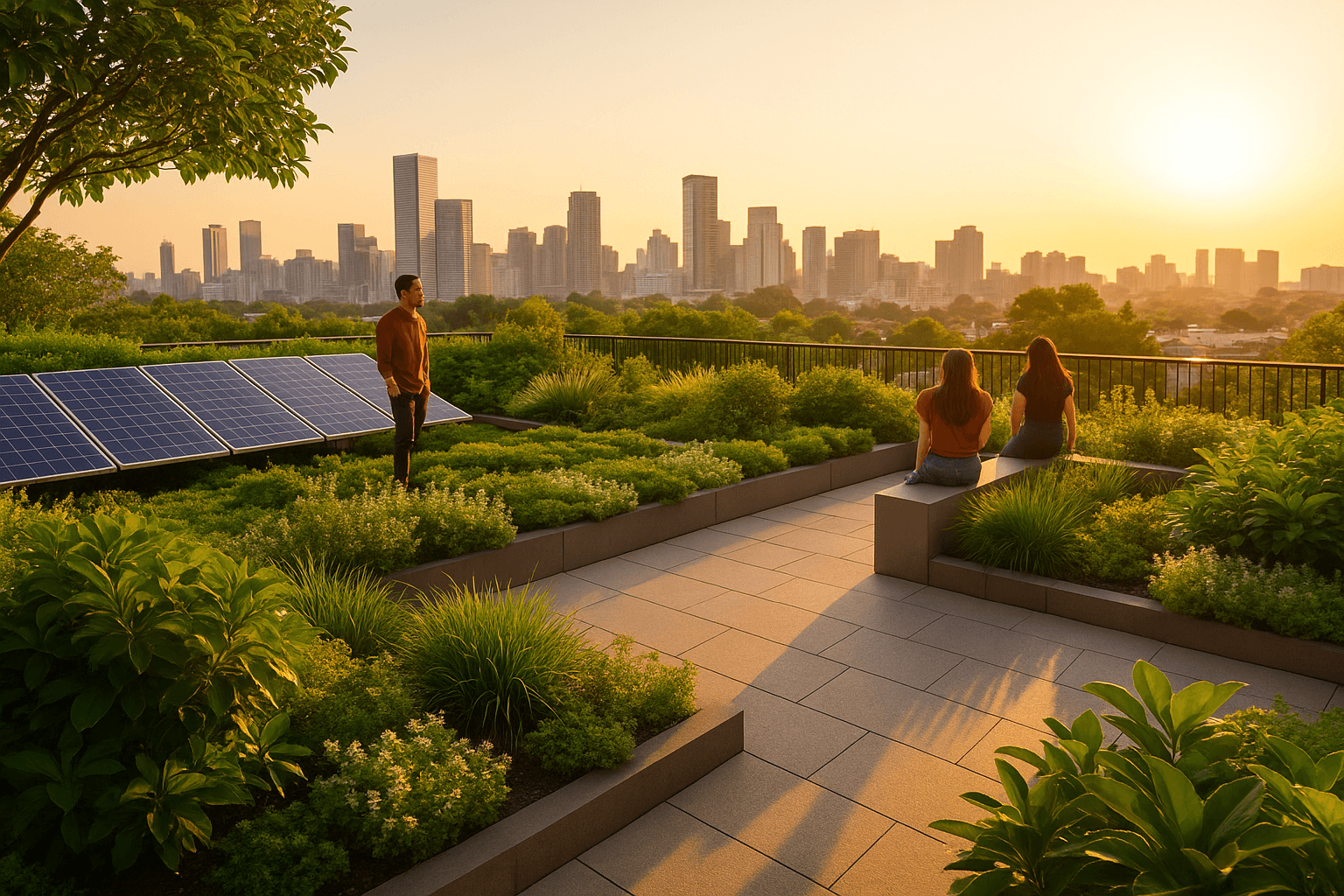
In India, the shift is just beginning - and it’s accelerating fast. Cities like Bengaluru and Ahmedabad are leading a quiet revolution in how rooftops are imagined. “Eco-terrace” developments now integrate urban farms, hydroponic walls, and community solar panels, creating hybrid spaces that are both sustainable and social. For residents, it’s not just about efficiency - it’s about reclaiming the lost connection between home and nature, between lifestyle and responsibility.
What began as a green design strategy has evolved into a cultural movement. Rooftops are no longer the domain of maintenance staff or machinery; they’ve become hubs of activity and community. Yoga classes at sunrise, children’s gardens, shared composting zones - these spaces foster a sense of belonging that few urban amenities can match. The greening of rooftops is, in many ways, the greening of social life itself.
As cities race to adapt to climate change, the answers might be right above our heads. Rooftops have the potential to become the new frontier of resilience - cooling our homes, growing our food, and reconnecting us with the rhythms of nature. The transformation of these forgotten surfaces signals a profound shift in urban consciousness. What started as sustainability is no longer just environmental - it’s emotional, communal, and deeply human.
AROUND THE WEB
The Urban Roofscape Renaissance - [BBC Future]
Across the world, rooftops are evolving into farms, parks, and renewable energy hubs, redefining sustainable urban living.
The Psychology of High Places - [Harvard Design Review]
Research reveals that elevation and open air significantly enhance emotional resilience, mental clarity, and creativity in urban environments.
Sky Gardens: The Next Public Parks - [The Guardian]
Global cities are transforming rooftops into accessible green zones, creating shared urban spaces that promote sustainability and community well-being.
India’s Rooftop Revolution - [Economic Times]
How Indian developers and homeowners are reclaiming rooftops as spaces of peace, power, and community.
A QUESTION FOR YOU
When was the last time you stood on a rooftop - not to check your signal, but to check your silence?
FEEDBACK
Have any detailed feedback? Write to us at hello@ashwinderrsingh.com and let us know how we can do better.
Disclaimer: This newsletter is intended for informational purposes only and should not be construed as professional advice. Please conduct your own due diligence prior to making any decisions.


Elevate your real estate journey with exclusive insights derived from decades of experience.
Join my tribe of home buyers, real estate and capital market investors, students, developers, home loan professionals and channel partners. Stay updated with my free, curated insights delivered weekly.
Subscribe to my newsletter