Read time: 7-8 minutes
In today's edition:
On My Mind: Why Children Remember Corners, Not Rooms
Interesting Insight: The Psychology Behind Corners and Memory
A Question For You: What corner from your childhood do you still remember —and why?
A THOUGHT TO PONDER
We design homes for adulthood. But childhood is where memory is formed.
What if the smallest spaces mattered the most?
ON MY MIND
Why Children Remember Corners, Not Rooms
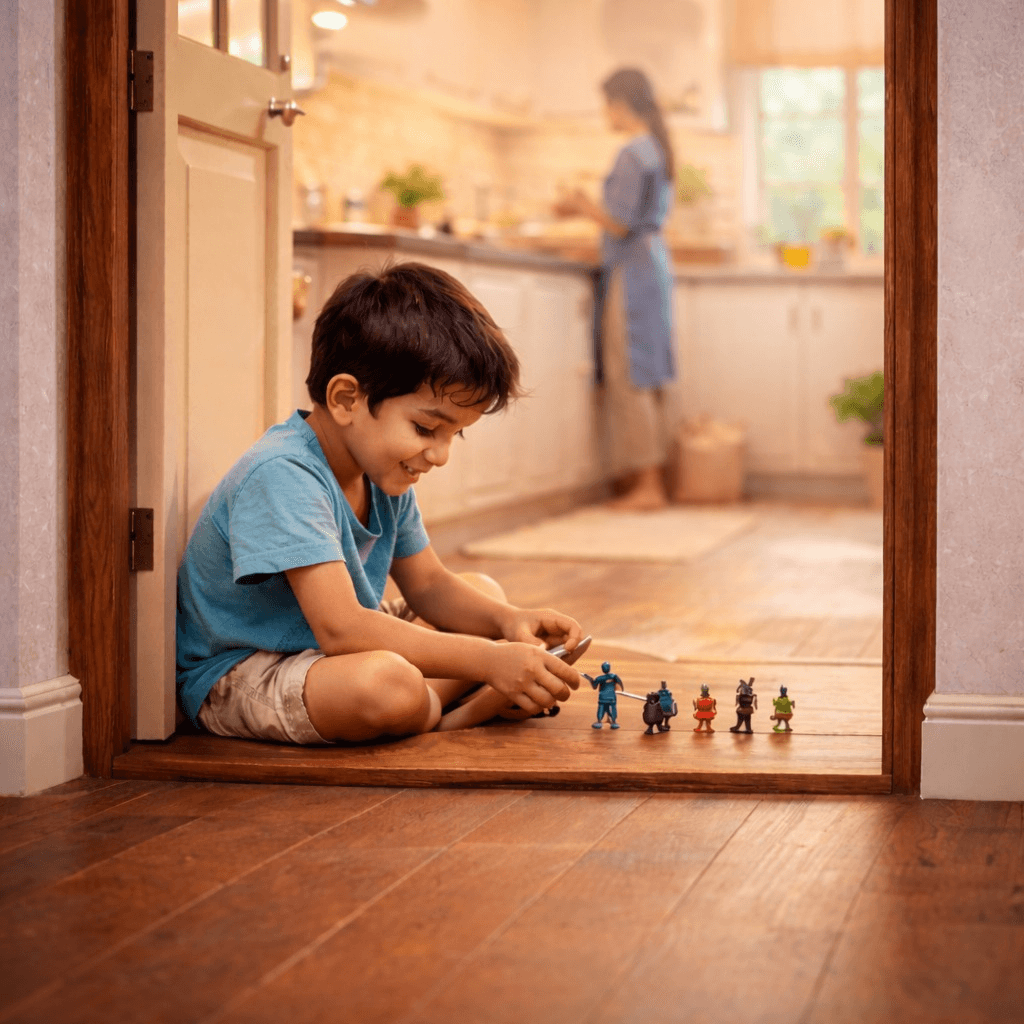
When we design homes, we think in rooms.
Bedrooms. Living rooms. Kitchens.
Children don’t.
They think in moments.
A corner isn’t a leftover space for a child.
It’s a beginning.
It’s where imagination feels protected.
Where identity quietly forms.
Where the world feels small enough to understand.
I’ve spent years walking through homes across India—luxury villas, compact apartments, old bungalows.
And I’ve noticed something consistent.
The homes adults admire are rarely the homes children remember.
Children remember:
edges
transitions
tucked-away spaces
places not meant to be noticed
Why?
Because childhood is not about scale.
It’s about containment.
A child feels safe not when space is large,
but when it feels theirs.
Traditional homes understood this intuitively.
Under the staircase.
Beside the courtyard.
Near the kitchen threshold.
These weren’t design statements.
They were emotional shelters.
Modern homes have erased many of these in pursuit of efficiency.
Straight lines. Clean boxes. Open plans.
But something disappeared in the process.
When a home has no edges, a child has nowhere to withdraw.
When everything is visible, nothing feels owned.
This is where behaviour changes.
Children without micro-territories seek escape.
Often through screens.
Often through isolation.
Children with micro-territories seek creation.
They draw.
They imagine.
They talk to themselves.
Environmental psychology confirms this:
contained spaces support emotional regulation and memory formation.
Corners are not architectural accidents.
They are psychological necessities.
INTERESTING INSIGHT
The Psychology Behind Corners and Memory
Environmental psychology has long shown that children do not form memories in wide, undefined spaces. Instead, their strongest spatial memories are created in places that feel contained—partially enclosed, visually distinct, and emotionally predictable. A corner, a nook, or a tucked-away edge offers exactly that: a sense of boundary without isolation.
Neurologically, these micro-spaces reduce sensory overload. Large open areas demand constant scanning—light, movement, sound—while smaller, defined spaces allow the brain to settle. For a child, this calmness enables imagination, self-talk, and emotional regulation. Memory forms more easily when the nervous system is not in a state of alert.
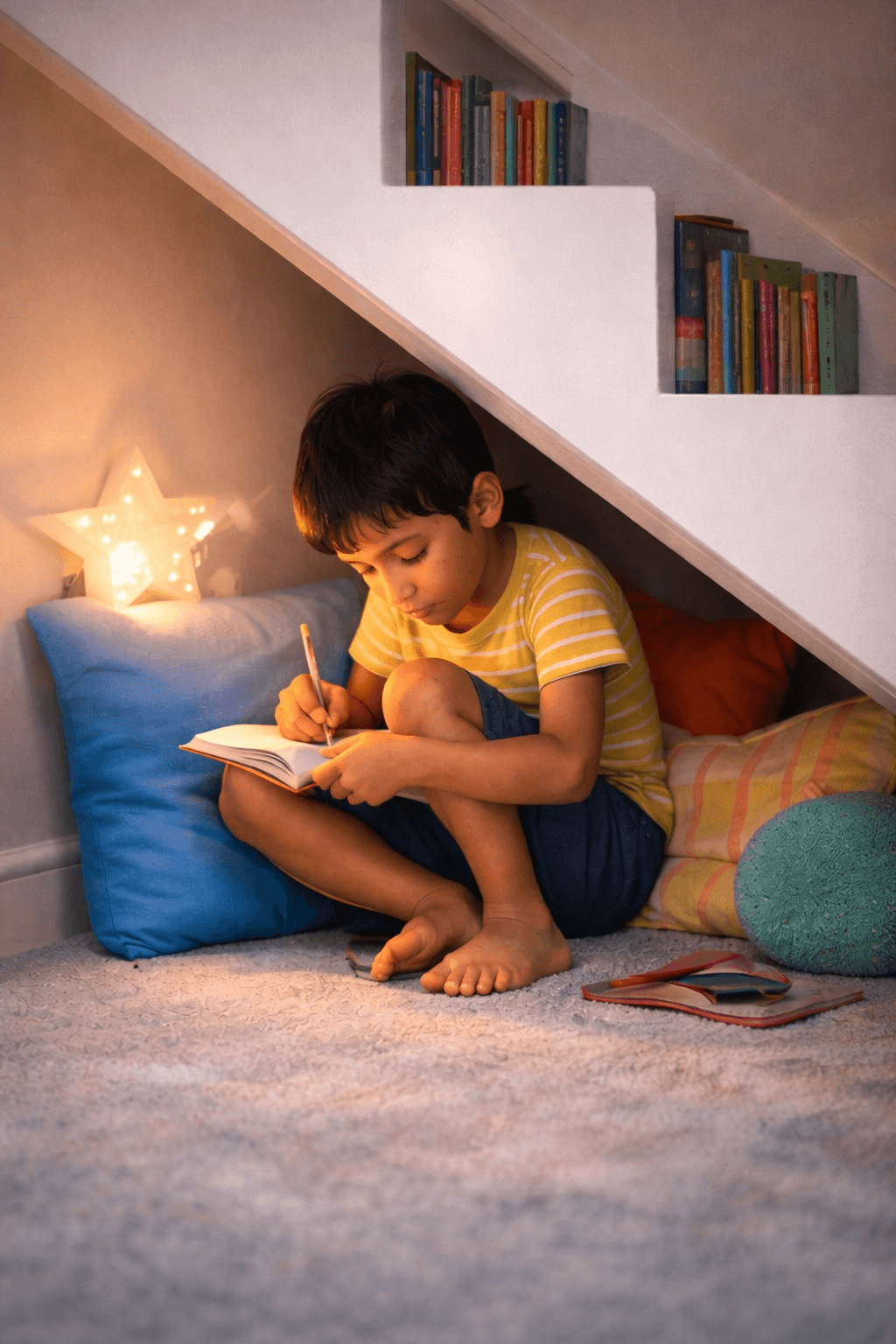
What makes corners especially powerful is repetition. Children return to the same spot day after day—under a staircase, beside a window, near a kitchen threshold. Over time, these places become emotionally “charged” with routine: reading, hiding, drawing, waiting. The brain links space with feeling, and feeling with memory.
This explains why adults rarely remember the square footage of their childhood homes—but vividly recall where they sat during a power cut, where they hid during a game, or where they felt alone but safe. Corners are not architectural leftovers. They are memory engines—quiet, unintentional, and profoundly human.
AROUND THE WEB
How Children Perceive Space (MIT Media Lab)
Children understand space through containment and repetition, not size or visual openness.
Environmental Psychology and Memory Formation (APA)
Memory forms strongest in environments that reduce sensory overload and feel emotionally secure.
Why Open-Plan Homes Don’t Work for Everyone (The Guardian)
Open layouts can increase stress by reducing privacy, acoustic control, and psychological boundaries.
A QUESTION FOR YOU
What corner from your childhood home do you still remember—and what made it feel yours?
FEEDBACK
Have any detailed feedback? Write to us at hello@ashwinderrsingh.com and let us know how we can do better.
Disclaimer: This newsletter is intended for informational purposes only and should not be construed as professional advice. Please conduct your own due diligence prior to making any decisions.

Elevate your real estate journey with exclusive insights derived from decades of experience.
Join my tribe of home buyers, real estate and capital market investors, students, developers, home loan professionals and channel partners. Stay updated with my free, curated insights delivered weekly.
Subscribe to my newsletter