Read time: 9-10 minutes
In today's edition:
On My Mind: Why Great Cities Are Built for the Tired, Not the Ambitious
Interesting Insight: Urban design & stress physiology
A Question For You: When you are completely drained - Does your city support you or test you?
A THOUGHT TO PONDER
A city shouldn’t constantly drain your spirit and strength; it should inspire you, recharge you, and give back even more.
ON MY MIND
Why Great Cities Are Built for the Tired, Not the Ambitious
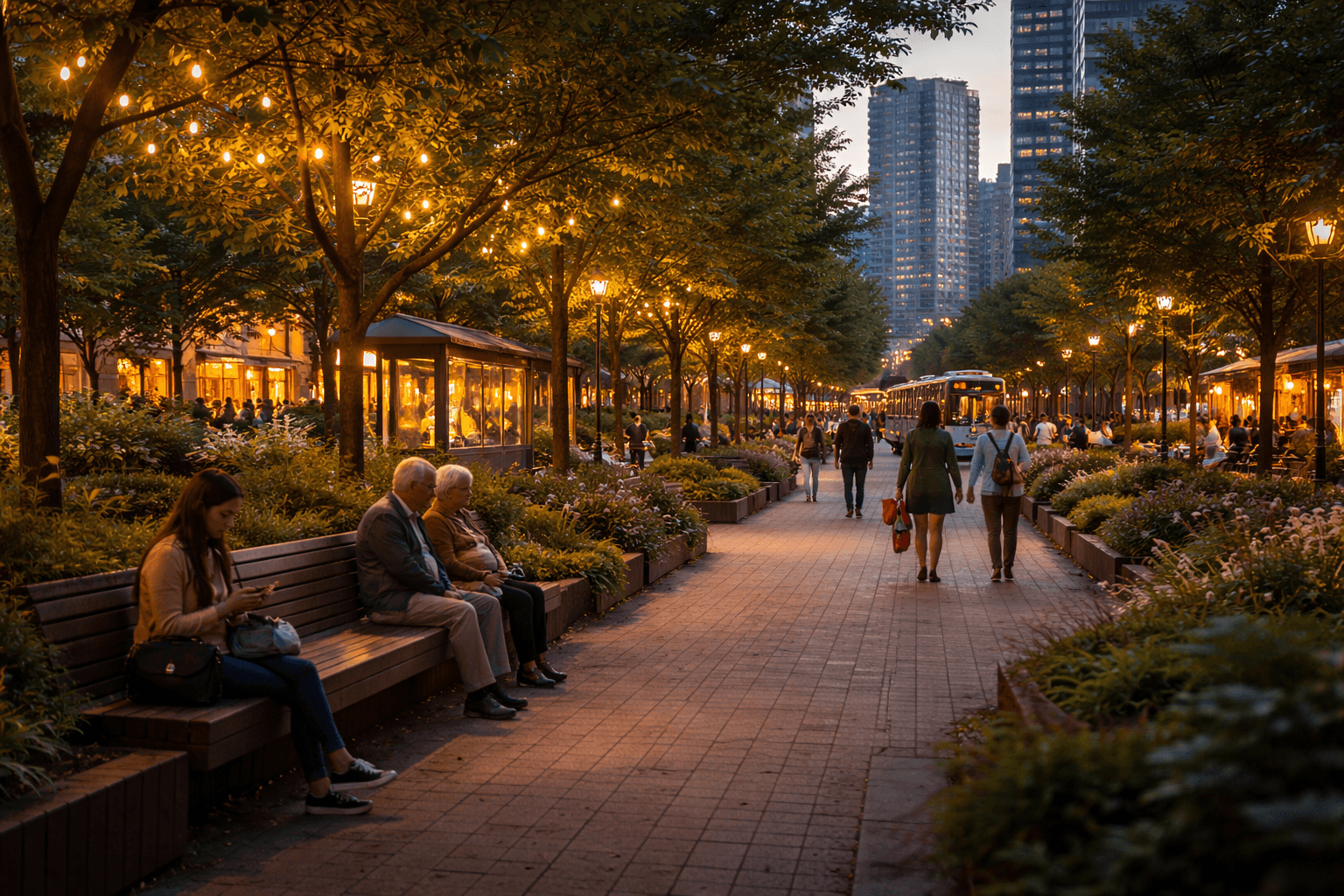
Urban ambition is loud and visible. Skylines compete for height, infrastructure announcements dominate headlines, and cities brand themselves as engines of growth. But the true test of a city is not how it performs at noon - it is how it feels at 8 PM, after work, after pressure, after decision fatigue. The ambitious citizen thrives in momentum, the tired citizen reveals whether design is humane. Walk through a city when you are exhausted and ask: are there benches, shade, even pavements, safe transport, and essentials within reach? If the answer is no, the city is not yet mature.
Many fast-growing cities prioritise expressways over sidewalks, malls over public squares, and private comfort over shared ease. But human energy is finite. When cities ignore this, they shift the burden onto individuals, turning urban stress into personal stress. Research consistently shows that poorly designed environments increase baseline cortisol levels, reduce walking frequency, and amplify social aggression. Cities that reduce friction increase civic trust. This is not romanticism - it is urban economics. People stay longer where life feels manageable, and businesses thrive where workers are not chronically fatigued.
Older Indian towns intuitively understood this balance. Markets were walkable, temples and mosques were central, and homes were close to daily needs. Ambition was supported, but not worshipped. Globally, cities revisiting humane design are rediscovering similar principles. Copenhagen invests heavily in cycling infrastructure. Barcelona prioritizes superblocks that reduce vehicular stress. Tokyo balances density with navigability. The insight is simple: the city must work when you are tired - because everyone becomes tired.
Children walking back from school, senior citizens running errands, mothers balancing work and care, professionals returning from long commutes - all experience limits. If a city works only when you are strong, it fails when you are human. The future of Indian urban development must expand its definition of success beyond FSI, absorption rates, and skyline aesthetics. We must ask: does this city reduce daily effort? A humane city is not anti-growth, it is growth that understands biology. The ambitious will always find opportunity. But the tired need design - and the city that protects the tired will inevitably empower the ambitious.
INTERESTING INSIGHT
Urban design & stress physiology
Urban ambition dominates headlines - skylines rise, infrastructure expands, and growth metrics become symbols of progress. But a city’s true character is revealed not during peak productivity, but during moments of fatigue. The ambitious citizen can push through friction. The tired citizen cannot. And that is precisely why design must be tested against exhaustion, not enthusiasm.
Studies show that walkable neighbourhood’s reduce stress markers significantly. Access to green space improves cognitive recovery. Reliable public transport lowers daily anxiety. Even small interventions - benches, shaded nodes, and micro-rest spaces - meaningfully increase pedestrian engagement. Urban compassion is not philosophical; it is measurable in biology, behaviour, and social outcomes.
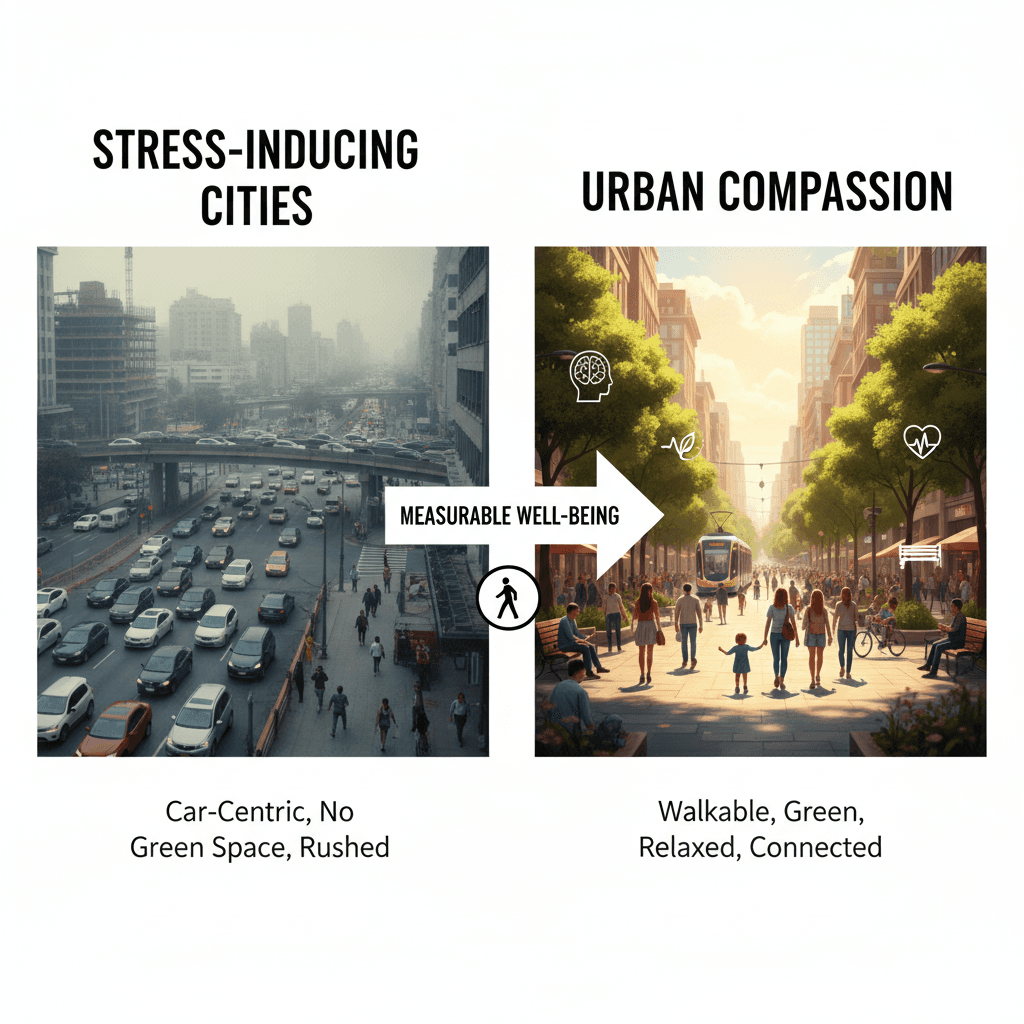
When cities neglect these fundamentals, they transfer effort onto individuals. Long commutes, unsafe crossings, heat exposure, and noise pollution quietly elevate baseline stress. Over time, urban strain becomes personal fatigue. Conversely, environments that reduce friction increase civic trust, social interaction, and economic stability. A humane city does not slow growth - it sustains it.
Across the world, cities integrating these lessons are reshaping urban priorities. Copenhagen reinforces cycling as daily infrastructure. Barcelona reduces vehicular dominance through superblocks. Tokyo balances density with navigable neighbourhoods. Each reflects a shared principle: energy conservation is urban strategy.
The future of Indian urban development must broaden its definition of success. Beyond skyline aesthetics and absorption rates, we must ask: does this city reduce daily effort? Because everyone becomes tired - children, workers, caregivers, the elderly. If a city works only when you are strong, it fails when you are human. The ambitious will always find opportunity. But the tired need design - and the city that protects the tired will ultimately empower everyone.
AROUND THE WEB
The 15-Minute City – [Financial Times]
The 15-Minute City is an urban model where daily needs are accessible within a short walk or cycle.
Urban Design and Stress Physiology – [Harvard Health]
Urban Design and Stress Physiology explores how built environments influence cortisol levels, cognitive load, emotional regulation, and overall human wellbeing.
Why Walkability Predicts Economic Stability – [Brookings Institution]
Walkability predicts economic stability because accessible, pedestrian-friendly areas increase local spending, strengthen community ties, reduce transport costs, and attract long-term investment.
A QUESTION FOR YOU
When you are completely drained - Does your city support you or test you?
FEEDBACK
Have any detailed feedback? Write to us at hello@ashwinderrsingh.com and let us know how we can do better.
Disclaimer: This newsletter is intended for informational purposes only and should not be construed as professional advice. Please conduct your own due diligence prior to making any decisions.

Elevate your real estate journey with exclusive insights derived from decades of experience.
Join my tribe of home buyers, real estate and capital market investors, students, developers, home loan professionals and channel partners. Stay updated with my free, curated insights delivered weekly.
Subscribe to my newsletter