Read time: 7 minutes
In today's edition:
On My Mind: Why the Best Cities Are Designed for Old People
Interesting Insight: Walkable cities reduce all-cause mortality by up to 30%.
A Question For You: If you were planning your next home today, would you choose a place that works only for your current age or one that will work for you 30 years from now?
A THOUGHT TO PONDER
Cities reveal what societies truly value.
When we design for the elderly, we are not planning for decline-we are planning for continuity.
ON MY MIND
Why the Best Cities Are Designed for Old People
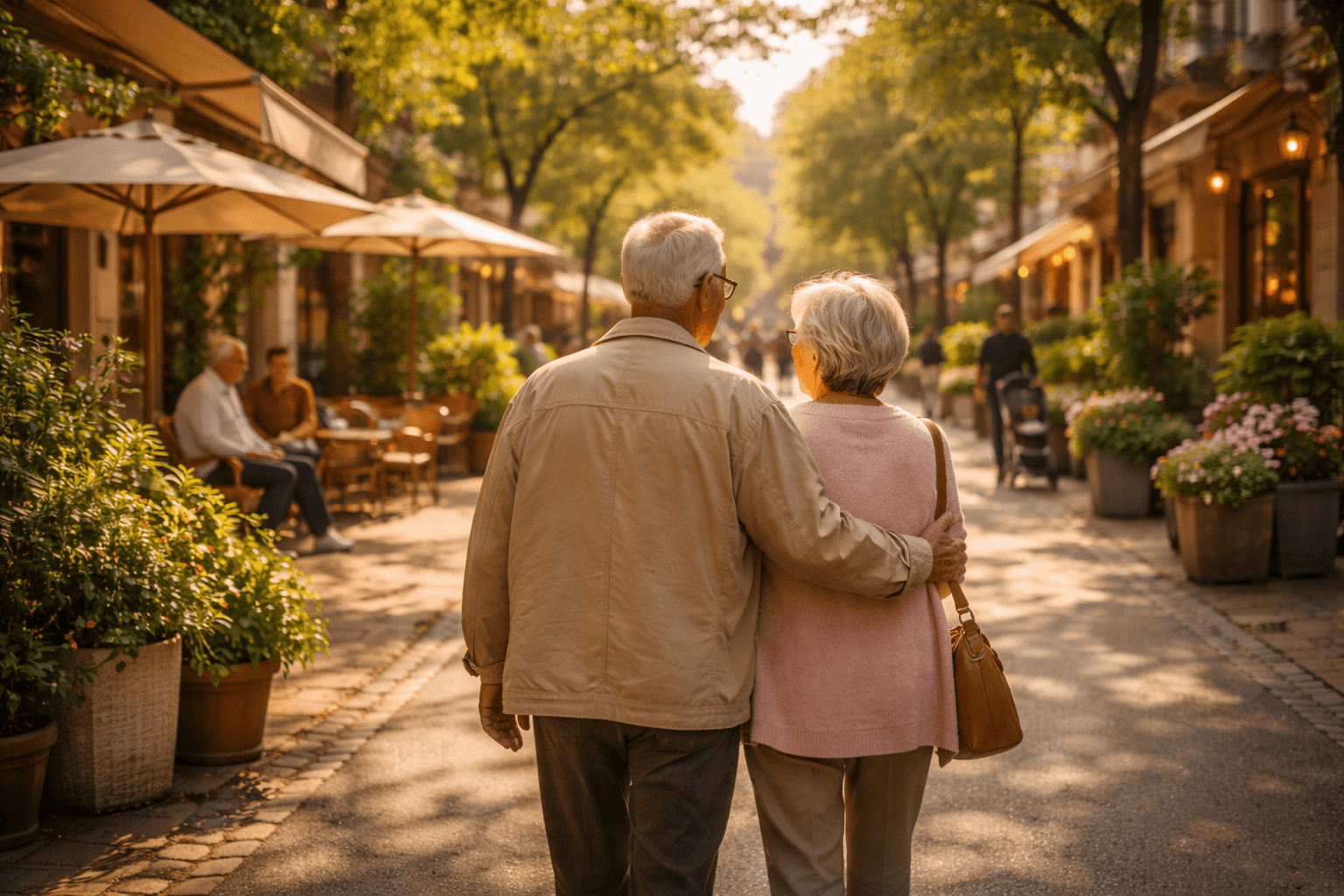
There is a quiet truth most cities prefer not to confront if a city works well for an 80-year-old, it will almost always work brilliantly for a 30-year-old. The reverse, however, is rarely true. Modern urban planning has spent decades optimizing for speed, productivity, and peak earning years, while overlooking slowness - the very condition in which longevity quietly takes root.
Look closely at the places where people live the longest and happiest lives. Not the richest or the flashiest cities, but those that age well Kyoto, Copenhagen, parts of Barcelona, the old quarters of Florence, and even pockets of Pondicherry. None of them were designed for scale. They were designed for people who walk slowly, with human-sized streets, short blocks, frequent places to rest, and neighbourhoods where daily life unfolds on foot.
This is not nostalgia, it is applied biology. As we age, our nervous systems become more sensitive. Loud traffic, harsh lighting, long distances, and fragmented social life quietly exhaust the body. Cities that respect ageing lower chronic stress, encourage natural movement, and sustain everyday social connection - extending life not medically, but structurally.
India now stands at the edge of this realization. We are building for the youngest demographic in the world, yet ageing faster than we admit. As the 60+ population doubles over the next two decades, most new development remains hostile to ageing. If we flipped the lens and asked whether a 75-year-old could live independently and with dignity, the benefits would cascade - children would thrive, adults would burn out less, families would stay longer, and healthcare costs would fall. Longevity, it turns out, is not built inside clinics, it is built between homes.
INTERESTING INSIGHT
Walkable cities reduce all-cause mortality by up to 30%.
Walkable cities reduce all-cause mortality by up to 30 percent - a statistic that quietly reshapes how we should think about urban life. This isn’t about fitness trends or lifestyle hacks, but about how the everyday structure of a city influences how long and how well people live.
Multiple global studies now show that walkable neighbourhoods significantly lower the risk of cardiovascular disease, dementia, and depression. When movement is built into daily routines - walking to shops, parks, transit, or neighbours health improves without conscious effort.
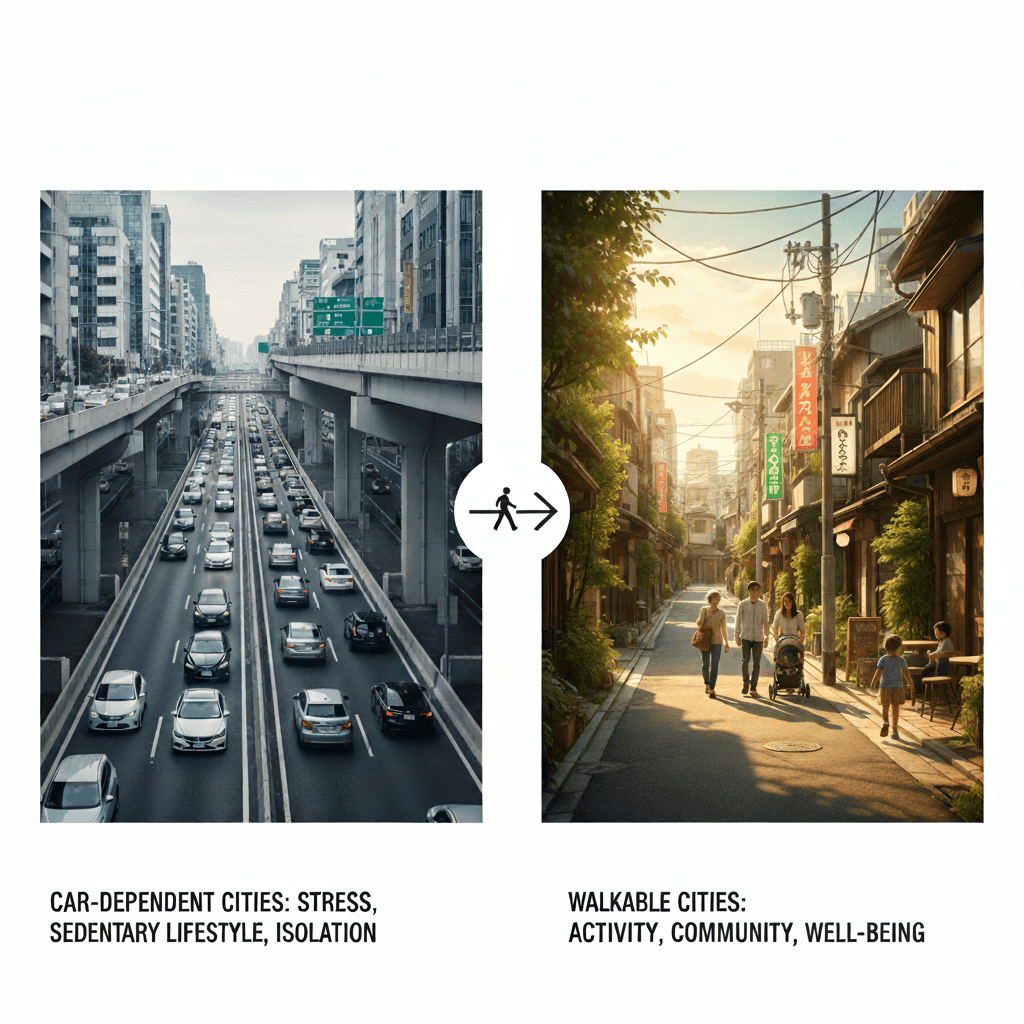
The largest gains are seen among older adults, for whom regular, low-intensity movement is critical. But the benefits do not stop there. Children grow more active, adults experience less stress, and communities become safer and more socially connected.
Japan offers a powerful example. It did not become the world’s longest-living nation by chance. Its cities quietly reward walking, social proximity, and routine movement woven into everyday life rather than confined to gyms or parks.
Longevity, in the end, is not a supplement or a medical intervention. It is an address - the streets we live on, the distances we walk, and the environments that make movement and connection inevitable.
AROUND THE WEB
Why Walkability Is the Strongest Predictor of Longevity – [Harvard Health]
A growing body of research links neighbourhood design directly to lifespan, mental health outcomes, cognitive resilience, and long-term emotional well-being.
How Copenhagen Designed for Ageing First – [Financial Times]
An in-depth exploration of how designing cities for the elderly fundamentally transformed urban systems, daily life, and long-term liveability.
Japan’s Urban Secret: Cities Built for the Old – [The Economist]
An analytical look at how ageing-friendly urban design quietly became one of Japan’s most powerful and enduring economic advantages.
A QUESTION FOR YOU
If you were planning your next home today, would you choose a place that works only for your current age or one that will work for you 30 years from now?
FEEDBACK
Have any detailed feedback? Write to us at hello@ashwinderrsingh.com and let us know how we can do better.
Disclaimer: This newsletter is intended for informational purposes only and should not be construed as professional advice. Please conduct your own due diligence prior to making any decisions.

Elevate your real estate journey with exclusive insights derived from decades of experience.
Join my tribe of home buyers, real estate and capital market investors, students, developers, home loan professionals and channel partners. Stay updated with my free, curated insights delivered weekly.
Subscribe to my newsletter