Read time: 7 minutes
In today's edition:
On My Mind: Why the next housing boom won’t have developers at its center?
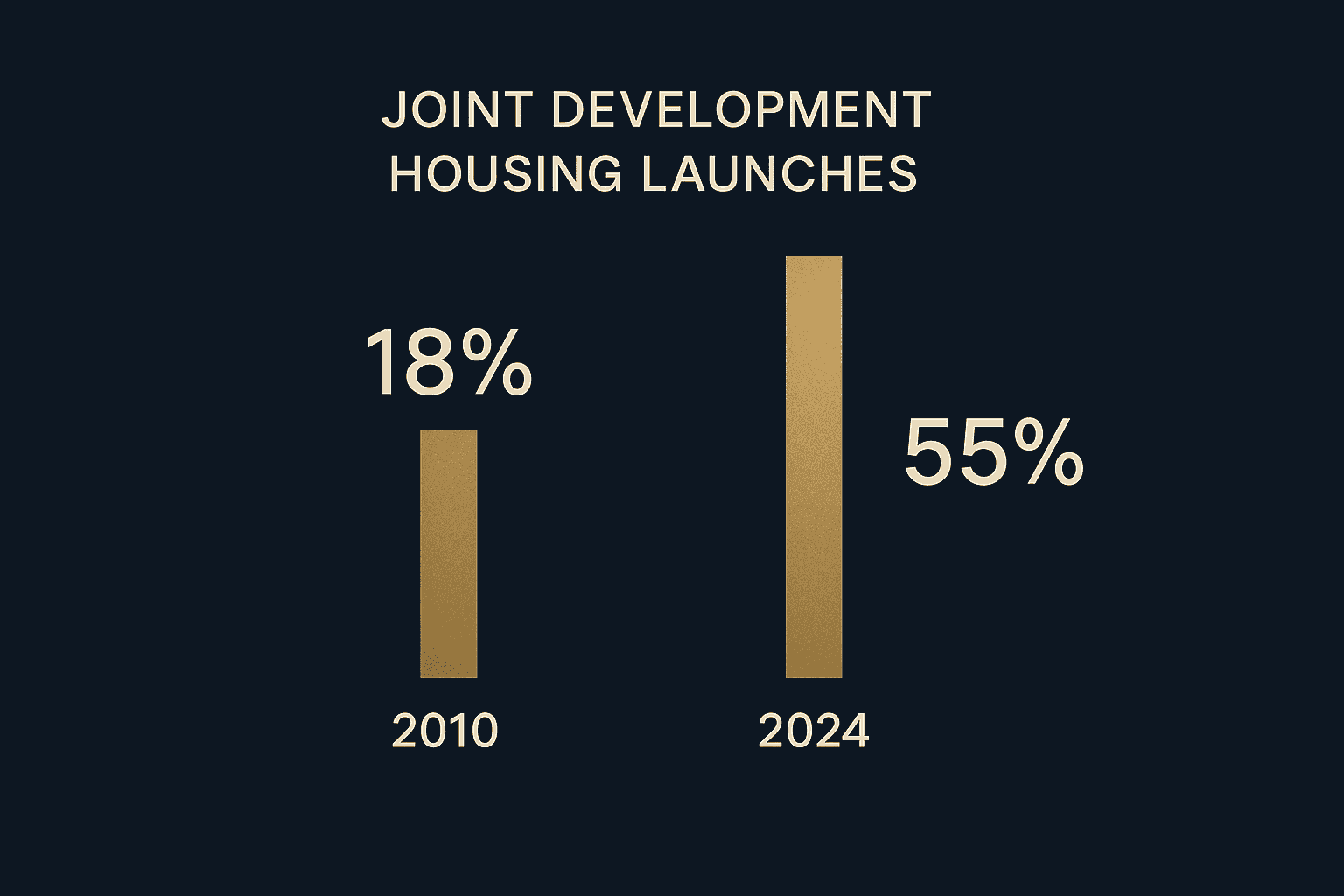
Interesting Insight: A quiet revolution is already underway: 55% of new housing launches in top Indian metros in 2024 were under some form of joint development or JV model, compared to just 18% in 2010.
A Question For You: If the builder is no longer the center of the housing universe, where would you place yourself in the next boom:
landowner, investor, or integrator?
A THOUGHT TO PONDER
What if the next housing boom doesn’t start with land, cement, and approvals—but with data, demand, and networks? Would that make developers passengers in a vehicle they once drove?
ON MY MIND
Why the next housing boom won’t have developers at its center?
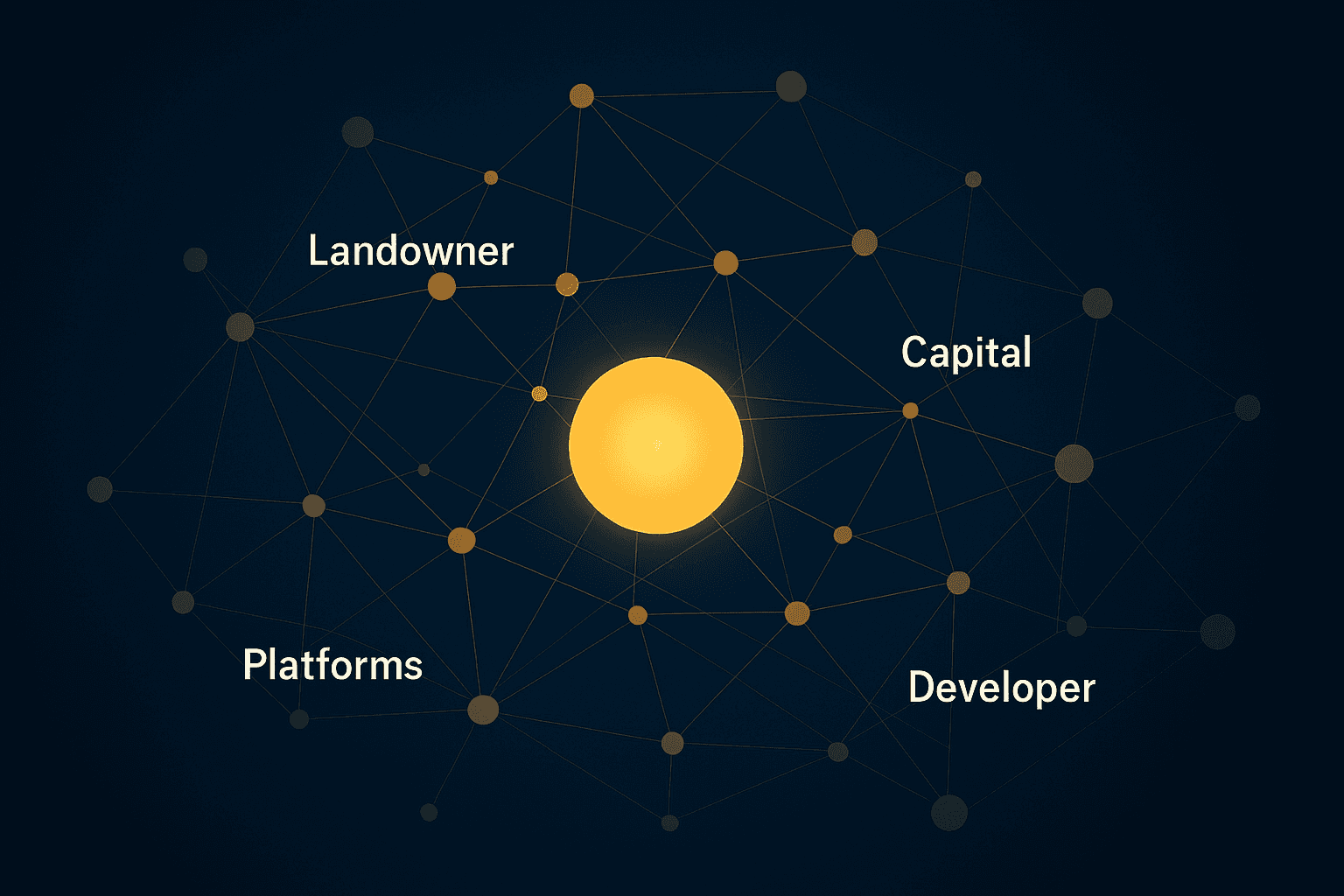
For decades, India’s housing story has revolved around developers. They acquired land, raised money, built towers, and sold dreams through glossy brochures. Families signed up because the developer was seen as the unquestioned center of the housing universe. But that era is fading. The next housing boom will not be built on a developer-centric model. Instead, the balance of power is shifting toward a broader ecosystem where the developer is just one of several players.
The first big force in this shift is landowners. In cities like Bengaluru, Pune, and Hyderabad, landowners have grown far more sophisticated. Instead of selling their land outright, they enter into Joint Development Agreements or pooling models that give them revenue shares and decision-making power. In this new reality, the developer is no longer the owner of the story, but rather the operator - a service provider working alongside landowners who now demand equal influence.
The second force is institutional capital. Over $60 billion has flowed into Indian real estate from private equity, sovereign wealth funds, and family offices in the past decade. With this influx of disciplined money comes oversight and accountability. Developers can no longer delay projects for years without consequence. Financiers now set terms, enforce governance, and drive efficiency. Developers must execute within this framework, making them accountable to capital in ways they never were before.
Finally, platforms are reshaping the housing market. Proptech startups, digital brokerages, and fractional ownership platforms are where younger buyers begin their housing journey. A 25-year-old in 2025 trusts algorithm-driven insights more than a builder’s brochure. Whoever controls buyer attention controls the market, and increasingly, that’s shifting to platforms. The result is a new housing ecosystem where developers act as integrators of land, capital, and trust - not sole rulers. The question that remains is: which developers will adapt to this distributed model, and which will hold on to the outdated “builder is king” narrative, only to be left behind?
INTERESTING INSIGHT
A quiet revolution is already underway: 55% of new housing launches in top Indian metros in 2024 were under some form of joint development or JV model, compared to just 18% in 2010.
For decades, developers stood at the center of India’s housing story, dictating the pace of construction, the flow of capital, and the shape of cities. But a quiet revolution is already underway. In 2024, nearly 55% of new housing launches in India’s top metros were under some form of joint development or joint venture model - a dramatic rise from just 18% in 2010. This signals a fundamental change in how projects are conceived, financed, and executed.
The reasons behind this shift are structural, not cyclical. Land values in urban India have escalated so sharply that landowners no longer feel pressured to sell outright. Instead, they wait, negotiate, and partner - securing a share of profits and an equal seat at the table. On the other side, developers, facing tighter credit and mounting financial stress, find it more viable to conserve cash and share returns rather than lock up huge sums in land acquisition.
Adding to this transformation is the growing influence of institutional capital. Private equity players, sovereign wealth funds, and family offices are now embedded in Indian real estate, bringing governance, discipline, and structured deal-making with them. For these investors, joint development agreements offer greater transparency and risk-sharing - mechanisms that align well with their global mandates. This financial oversight ensures that developers are no longer freewheeling promoters, but disciplined executors within a controlled framework.
Globally too, India is not an outlier. In Singapore and Tokyo, listed developers increasingly behave like asset managers, orchestrating capital and partnerships rather than just pouring concrete. In Dubai, sovereign funds and family offices exert more influence over the skyline than individual promoters. These global precedents suggest that India is not only following but also accelerating toward a model where developers play a reduced, though still vital, role.
The real estate protagonist of tomorrow, then, will not be the lone builder-hero of the past but more of a conductor - orchestrating a symphony of landowners, investors, designers, and platforms. This distributed model could bring greater accountability, efficiency, and alignment with buyer needs. The question is no longer whether this shift will happen, but which players will adapt fast enough to lead in this new ecosystem.
AROUND THE WEB
India’s Landowners Are Becoming Developers — (Economic Times)
Landowners, once sidelined, now control urban expansion through partnerships, joint ventures, and revenue-sharing models, redefining power in real estate.
Private Equity Reshapes Housing — (Business Standard)
Global investors are enforcing discipline in Indian housing markets by demanding governance, structured deals, timely delivery, and financial accountability from developers.
Proptech Eats Market Share — (Forbes India)
From online platforms to AI-powered brokers, technology is redefining customer acquisition by shifting trust, efficiency, and decision-making power toward digital ecosystems.
The End of Builder Monopoly — (Financial Times)
Globally, developers are evolving into integrators, coordinating land, capital, design, and partners, rather than acting as sole rulers of real estate projects.
A QUESTION FOR YOU
If the builder is no longer the center of the housing universe, where would you place yourself in the next boom:
landowner, investor, or integrator?
FEEDBACK
Have any detailed feedback? Write to us at hello@ashwinderrsingh.com and let us know how we can do better.
Disclaimer: This newsletter is intended for informational purposes only and should not be construed as professional advice. Please conduct your own due diligence prior to making any decisions.


Elevate your real estate journey with exclusive insights derived from decades of experience.
Join my tribe of home buyers, real estate and capital market investors, students, developers, home loan professionals and channel partners. Stay updated with my free, curated insights delivered weekly.
Subscribe to my newsletter