text
Across boardrooms and investment committees today, the conversation has moved well beyond whether AI matters. The real tension lies in why so many AI initiatives never move past experimentation. A proof of concept runs well, a few teams test tools, and yet the promised operational impact rarely materialises.
Reporting cited in Forbes notes that nearly 95% of AI projects fail to move beyond the pilot stage, often due to unclear use cases, fragmented data, and weak integration with real-world decision-making.
For investors, founders, and industry leaders evaluating where technology actually creates value, this pattern is familiar. The question is no longer what AI can do, but how it can be implemented to produce measurable outcomes.
This article explores eight practical ways leaders, operators, and investors can approach implementing AI more effectively, turning isolated experiments into capabilities that genuinely improve decision-making and long-term performance.
Key Takeaways:
Most AI initiatives fail to scale: A Forbes report notes that nearly 95% of AI projects stall at the pilot stage, typically due to unclear use cases, fragmented data, and poor integration with real decision-making processes.
Successful AI implementation starts with a clear decision problem: Organisations see the most value when AI is applied to specific questions such as market forecasting, pricing strategy, demand prediction, or investment risk evaluation.
Data structure and workflow integration matter more than the technology itself: AI systems deliver meaningful insights only when supported by reliable datasets and embedded directly into operational or investment workflows.
Human expertise remains essential: AI can identify patterns in complex datasets, but experienced investors, operators, and analysts provide the contextual judgement required to interpret signals and act on them responsibly.
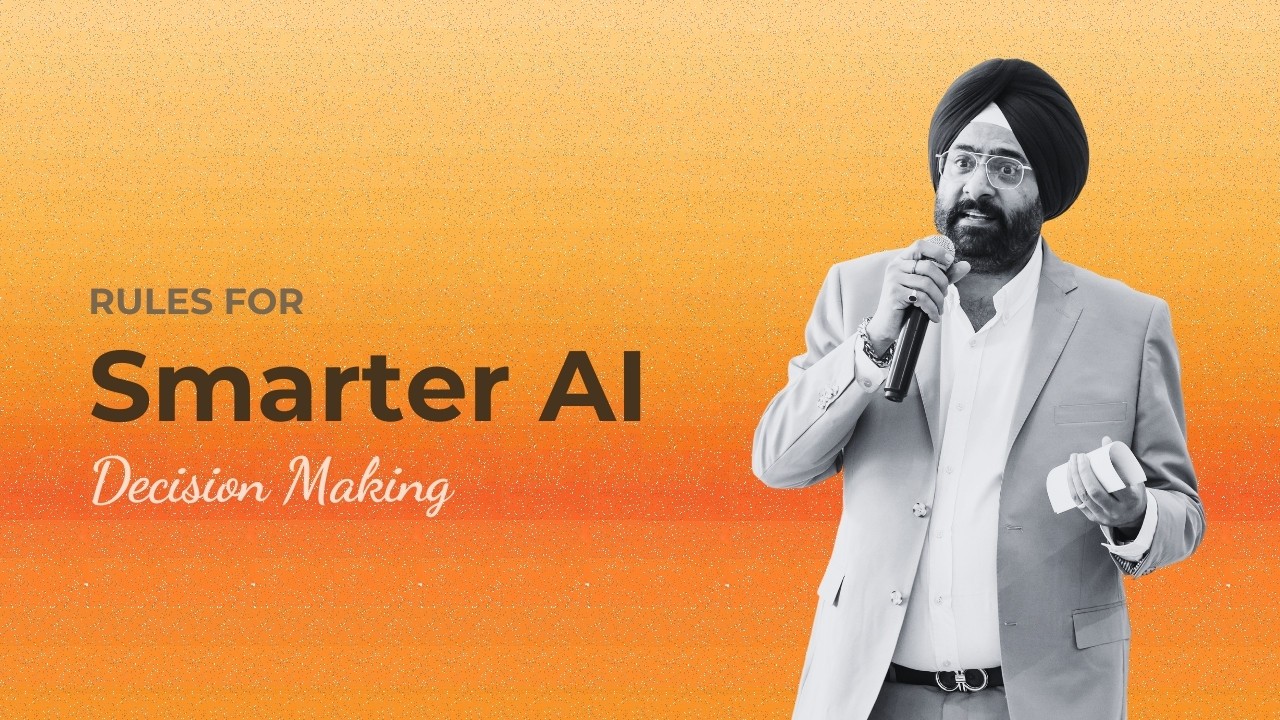
Leadership discipline ultimately determines AI success: As emphasised by Ashwinder R. Singh, implementing AI effectively requires structured thinking, long-term strategy, and the ability to translate data insights into confident decisions; an approach reflected in the advisory and industry work of firms such as BCD Group.
Why Implementing AI Is Becoming a Strategic Priority
For investors, founders, and business leaders, the conversation around AI has quietly shifted over the past few years. It is no longer about discovering what artificial intelligence can do. The real question now is how it can be implemented to improve real decisions about capital, operations, markets, and growth.
In many industries, leaders are already surrounded by large volumes of data, yet extracting clear signals from that information remains difficult. Implementing AI has therefore become a strategic priority because it helps decision-makers move from information overload to actionable insight.
When applied correctly, AI can support leaders in analysing market signals, identifying operational patterns, and evaluating opportunities with greater clarity.
In practical terms, leaders are prioritising implementing AI to:
Analyse complex datasets faster when evaluating markets, operations, or investments
Improve forecasting and risk assessment in uncertain economic environments
Support strategic decisions with deeper data-driven insights
Respond to market shifts more quickly through real-time analysis
Must Read: AI in Real Estate: Redefining the Indian Property Market
The real challenge is not understanding AI, but implementing it in ways that influence real decisions and outcomes. This is where a few practical approaches begin to make a difference.
8 Practical Ways That Make Implementing AI Successful
Successful AI adoption often comes down to practical execution rather than ambitious plans. Leaders who see real value from AI tend to focus on clear use cases, disciplined experimentation, and systems that integrate insights into everyday decisions.
A few grounded approaches consistently make the difference between scattered pilots and AI initiatives that deliver sustained strategic value.
1.Start With a Clearly Defined Business Problem
AI becomes useful only when tied to a specific operational or investment decision. For example, a real estate investment firm analysing multiple markets may struggle to quickly compare absorption rates, rental demand, and supply pipelines. AI models can process these datasets simultaneously to identify emerging opportunities or risk signals.
How to implement this:
Identify one high-impact decision, such as site selection, demand forecasting, or pricing strategy.
Map the data inputs that influence that decision (inventory, demographics, transaction history).
Build AI tools that answer a clear operational question, not broad analytics experiments.
2.Align AI Initiatives With Strategic Decision-Making Goals
AI initiatives deliver value when they directly support strategic priorities such as portfolio expansion, operational efficiency, or risk mitigation. For instance, a developer evaluating new projects can use AI-driven market analysis to assess demand trends across micro-markets before committing capital.
How to implement this:
Connect AI projects to strategic objectives such as yield optimisation or market expansion.
Assign decision-makers from investment or operations teams as project sponsors.
Prioritise AI initiatives that improve capital allocation decisions.
Suggested Read: The Repricing of Credibility in Emerging Markets: Ashwinder R. Singh
3.Build a Reliable and Structured Data Foundation
In many real estate and investment organisations, data exists across multiple systems: broker reports, internal spreadsheets, CRM records, and market databases. Without structured data, AI models cannot produce reliable insights. Building a centralised data layer ensures that pricing trends, supply pipelines, and transaction activity are consistently analysed.
How to implement this:
Consolidate market data, internal transactions, and financial metrics into a single repository.
Standardise datasets across projects and geographies.
Establish governance to maintain consistent data quality and updates.
4.Begin With Focused Pilot Projects Before Scaling
Large AI transformations often fail because organisations attempt broad deployments immediately. A more effective approach is to begin with targeted pilots. For example, a property management company may first use AI to predict maintenance issues in a single portfolio before expanding the model across all assets.
How to implement this:
Launch pilots within a specific function, such as leasing analysis or maintenance forecasting.
Measure outcomes such as cost reduction, occupancy improvements, or operational efficiency.
Expand implementation once the model proves reliable.
Suggested Read: How PropTech in India Is Reshaping Real Estate Growth
5.Integrate AI Into Existing Workflows, Not Separate Tools
AI insights only create value when they influence everyday workflows. For instance, if an investment team receives predictive insights on rental growth, those insights should appear directly in the dashboards used during acquisition analysis rather than in a separate analytics tool.
How to implement this:
Embed AI outputs into existing investment analysis or CRM platforms.
Automate alerts when market indicators change significantly.
Ensure teams can act on AI insights within their normal decision processes.
6.Combine AI Capabilities With Human Expertise
AI can process data at scale, but experienced investors and operators still provide essential context. For example, a model might flag a micro-market as high potential based on demographic growth, but local experts may recognise regulatory risks or infrastructure constraints.
How to implement this:
Use AI to surface patterns and opportunities, not replace expert judgement.
Include analysts or asset managers in model validation processes.
Create review checkpoints to refine AI recommendations with human expertise.
In complex property markets, translating data and market signals into confident decisions often requires both analytical insight and experienced advisory support; something firms like BCD India have focused on through decades of work across development, construction, funding, and real estate consultancy.
7.Invest in Scalable Infrastructure and the Right Tools
AI initiatives require infrastructure capable of handling large datasets and continuous model updates. Investment firms and real estate platforms increasingly rely on cloud systems that allow AI models to integrate property data, financial metrics, and market indicators across multiple regions.
How to implement this:
Use cloud platforms and data warehouses to manage large datasets.
Implement APIs that connect AI models to financial and operational systems.
Ensure infrastructure supports scaling across multiple portfolios or markets.
8.Measure Outcomes and Continuously Refine AI Systems
AI implementation is an ongoing process rather than a one-time deployment. Models must evolve as market conditions change. For example, rental forecasting models must adapt when new supply enters the market or when demand shifts due to economic conditions.
How to implement this:
Track metrics such as forecast accuracy, deal performance, or operational efficiency.
Retrain models regularly using updated market and operational data.
Encourage teams to provide feedback on how AI insights influence real decisions.
Beyond tools and systems, the success of implementing AI ultimately depends on leadership judgement and strategic direction.
For a deeper look at real estate strategy and investment thinking, Ashwinder R. Singh’s masterclass offers practical guidance drawn from decades of industry experience.
A Leadership Lens on Implementing AI: Ashwinder R. Singh
As AI becomes embedded in business strategy, the real challenge for leaders is not access to technology but how to apply it with discipline and context. In sectors such as real estate, where decisions involve long investment cycles, fragmented data, and multiple market variables, technology must support structured thinking rather than replace it.
This is where Ashwinder R. Singh's perspective becomes relevant.
Singh currently serves as Vice Chairman and CEO of BCD Group and has held leadership roles across global banking and real estate advisory, including Citibank, Deutsche Bank, JLL Residential, and ANAROCK. He is also Chairman of the Real Estate Committee at the Confederation of Indian Industry and the author of bestselling books such as Master Residential Real Estate, which focuses on helping buyers and investors make structured property decisions.
From this leadership perspective, implementing AI is not about automation alone. It is about improving the quality of decisions leaders make every day.
Key principles that shape this approach include:
Use technology to strengthen judgement, not replace it
AI can surface patterns in pricing, supply pipelines, and demand trends, but final decisions still require market understanding and experience.Focus on decisions that involve complex data
Markets such as real estate generate large volumes of information, from demographic shifts to transaction trends, where AI can help interpret signals faster.Treat AI as a strategic capability, not a short-term tool
Sustainable impact comes when AI is integrated into long-term decision frameworks rather than isolated experiments.Maintain transparency and disciplined analysis
Technology should improve visibility into markets, enabling investors and professionals to evaluate opportunities with greater clarity.
Explore the journey and leadership philosophy of Ashwinder R. Singh in his full biography.
Conclusion
Artificial intelligence is steadily becoming part of how modern businesses interpret information, evaluate opportunities, and respond to change. Yet the difference between organisations that experiment with AI and those that benefit from it often lies in how thoughtfully it is implemented. Clear priorities, reliable data, and disciplined execution remain far more important than the tools themselves.
For investors, founders, and industry leaders, the real opportunity lies in using AI to enhance clarity in complex decisions; whether that involves analysing markets, forecasting demand, or evaluating long-term investments. When implemented with the right structure, AI becomes less about automation and more about strengthening the analytical foundations of decision-making.
For more insights on leadership, investing, and the evolving dynamics of real estate and business strategy, subscribe to the newsletter of Ashwinder R. Singh and stay updated with his latest perspectives.
FAQs
1.What is the first step in implementing AI successfully?
The first step is identifying a specific business or investment decision where AI can improve analysis, such as market forecasting, pricing strategy, or risk evaluation.
2.Why do many AI projects fail after the pilot stage?
Many AI projects fail because they remain experimental and are not integrated into real workflows or decision-making processes.
3.How can investors use AI in decision-making?
Investors can use AI to analyse market trends, pricing patterns, demographic data, and portfolio risks to identify opportunities faster.
4.Do businesses need large datasets to start implementing AI?
No. Many organisations begin implementing AI using existing operational or financial data and expand as more structured data becomes available.
5.How long does implementing AI typically take?
Initial AI pilots can deliver insights within a few months, after which successful models can be scaled across operations.
Read Related Blogs

Real Estate Advising in India: What Buyers Need to Ask Before They Trust Anyone
Real estate advising explained: how it differs from brokerage and what to check first.

How To Invest In Real Estate In Bangalore: A Practical Guide For Buyers And Investors (2026)
Learn how to invest in Bangalore real estate, compare property types, and reduce buyer risk.

Real Estate Agency In Delhi: How To Find And Verify The Right One
Learn how to evaluate Delhi real estate agencies, compare fees, and verify credentials.